Cart
0
You will like also
A genuine leather bag is not an accessory like any other. It is a piece you keep for years, that changes gently over time and ends up carrying the traces of your life: the corner slightly softened from being held, the deeper patina where your hand rests. It is also a purchase worth thinking about, because not all leathers are equal and the terms used often add to the confusion.
This guide, the cornerstone of our "Leather" series, gives you everything you need to buy a genuine leather bag with full knowledge: understanding the different leathers, telling real leather from an imitation, assessing a bag's quality, caring for it and knowing how long it can last. It complements our guide to choosing the right handbag.
In France, the word "leather" is regulated: it refers to an animal hide whose original fibrous structure is preserved, and which has been tanned so it does not rot. A synthetic material therefore cannot be sold as leather. That is why we speak of faux leather, PU leather or "vegan leather" for materials that imitate its look without being leather.
The phrase "genuine leather" is mainly a way of stressing the animal origin of the material. It says nothing, however, about the quality of the leather used. Between full-grain leather and a split covered with a film, the difference in structure and longevity is considerable, even though both are technically leather. Hence the importance of looking beyond the label.
For handbags, the most widely used leather is cowhide leather, from adult cattle. Thick, strong and supple enough, it suits structured bags as well as softer shapes. It is the material of the vast majority of YUMIKA bags, which you will find in our all bags collection.
Leather is first distinguished by the layer of hide used. The grain is the upper part, the densest and strongest: a full-grain leather keeps it intact, with its natural texture. A corrected-grain leather has been lightly sanded to remove imperfections, then coated with a finish that evens out its look. Finally, the split is the lower layer: more fibrous and less strong, it is often used for suede or covered with a film to imitate the grain.
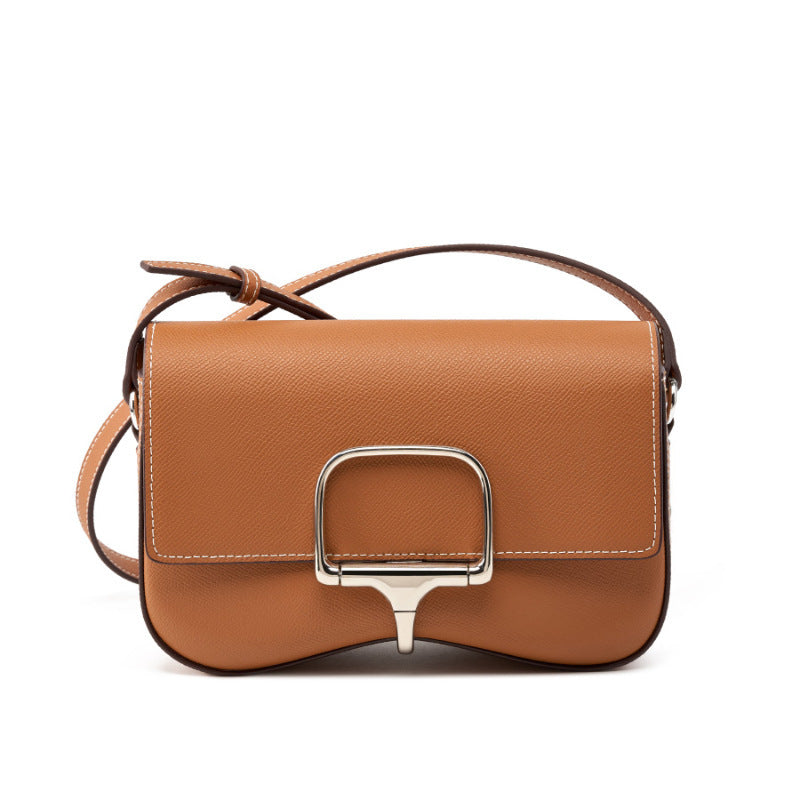
Then come the finishes. Smooth leather has a soft, slightly shiny surface, elegant and easy to care for, like that of MILAN SPRING. Pebbled leather, whose texture is natural or embossed, resists scratches better and is perfect for an everyday bag. Nubuck and suede, with their velvety feel, are more delicate and dislike water.
Tanning also affects the result. Vegetable tanning gives a firmer leather that darkens noticeably over time; chrome tanning, more common, gives a supple leather with stable colours that is more water-resistant. We devote a full article to the types of leather in this series.
First reflex: look and touch. Real leather shows slight irregularities in its grain, visible pores and warmth to the touch. Synthetic material often has a pattern that is too regular and a cold, almost plastic feel. Smell is also a good clue: leather smells of leather, PU often smells of chemicals.
Then look at the edges of the leather. On a well-made bag, they are dyed, smoothed or folded (turned over and stitched). Edges that fray or reveal a fabric layer under a film betray a reconstituted material. Also look at the stitching: regular, tight, with no loose threads. Irregular or loose stitches are a sign of rushed manufacturing.
Finally, examine the inside and the hardware: a well-stretched lining, neat pockets, zips that slide without catching, heavy, firmly attached metal parts. These details say more than a high price or a famous brand.
Good news: a leather bag needs little care, as long as you have the right habits. Day to day, a quick wipe with a soft, dry cloth is enough to remove dust. Every two to three months, or more often for a heavily used bag, apply a thin layer of nourishing leather lotion or cream suited to smooth leather: it keeps the leather supple and prevents cracking.
Before winter or a rainy spell, a leather waterproofing spray helps limit water marks. If your bag gets wet, let it dry naturally, away from a radiator, stuffed with paper so it keeps its shape. Direct heat is leather's enemy: it hardens it and makes it crack.
For storage, avoid plastic bags, which stop leather from breathing. Use a fabric dust bag, stuff the inside and store the bag upright, away from direct light, which can fade colours. Always test a new product on a hidden area, especially on light leathers such as white or beige.
Well chosen and well cared for, a cowhide leather bag can last ten years or more. The parts that wear first are usually the corners, the handles and the strap, where rubbing is most frequent. A bag with reinforced areas in these places will age much better.
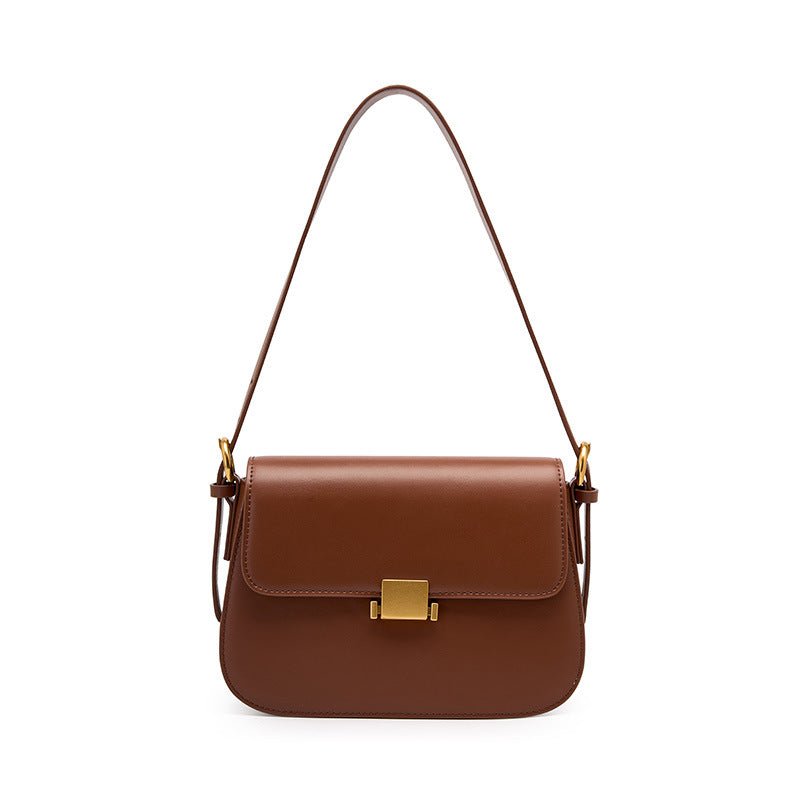
Above all, leather has a unique quality: it develops a patina. With time, light and the touch of hands, its colour deepens and its surface takes on a slight sheen. Far from being a flaw, this change gives the bag character and makes it unique. A bag like LARA, made of leather, is designed precisely to develop a lovely patina over the years.
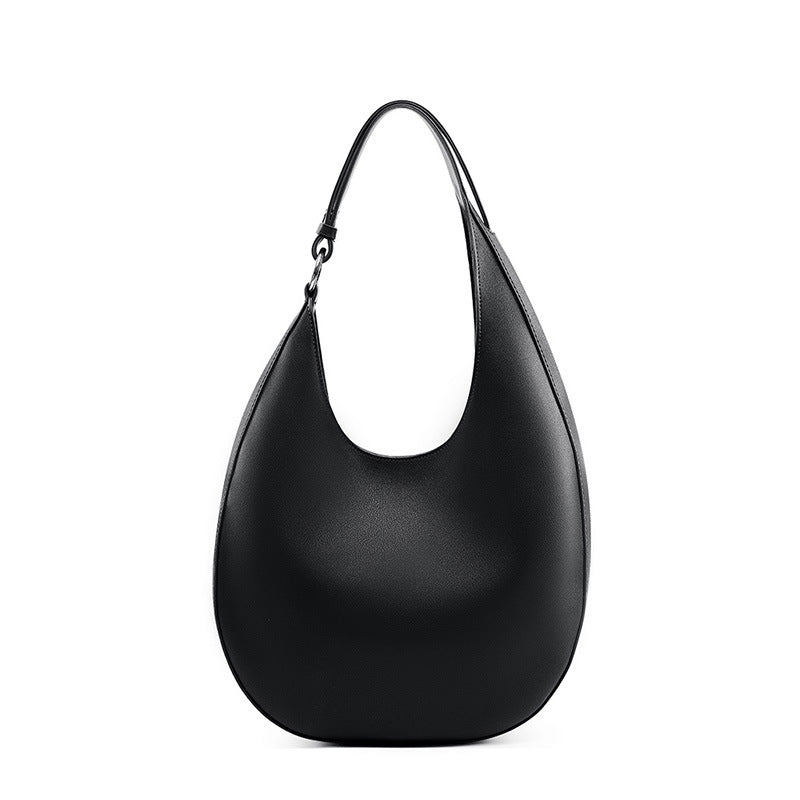
Measured against how often it is used, this longevity makes a leather bag a reasonable purchase. Our cowhide leather bags, such as HALFMOON with its half-moon silhouette, are priced at around €90 to €150: an investment that quickly pays for itself over several years of regular wear.
Buying a genuine leather bag means betting on durability. Check the type of leather, look at the edges and stitching, favour cowhide leather for everyday use and adopt a few simple care habits. In return, you will have a bag that grows more beautiful over the years instead of wearing out. To discover our cowhide leather bags, browse our bags collection, and keep reading with the articles in this series on types of leather, care and patina.
Look at the grain (irregular and porous on real leather), the edges (with no visible fabric layer), the feel (warm and supple) and the smell. If in doubt, rely on the product page, which should clearly state the material.
Yes. It is one of the most widely used leathers in leather goods, because it combines strength, thickness and suppleness. It suits structured bags as well as soft styles.
A shower will not damage a well-maintained smooth leather, especially if it has been waterproofed. Simply wipe it and let it dry naturally, away from any heat source.
Every two to three months for a bag carried regularly, and whenever the leather looks dry or dull. A thin layer is enough: too much product can make the surface greasy.
A well-made cowhide leather bag, cared for regularly, can last ten years or more. Corners, handles and straps are the first areas to keep an eye on.
Find all the articles in the series: everything about leather bags. Also read: the different types of handbags.