Cart
0
You may also like
By shape
 Handbags
 Shoulder bags
 Crossbody bags
 Bucket bags
 Totes
By material
By size
 Mini bags
 Large bags
By colour
Browse
Most loved

Among all the leathers used in leather goods, one name comes up more often than the others: cowhide leather. It is used for most quality handbags, from the most accessible styles to the creations of the great fashion houses. This is no coincidence: this leather combines a set of qualities rarely found together in a single material.
This article from our "Leather" series explains what cowhide leather is, its characteristics, its finishes and why it is often considered the ideal leather for a bag. It goes further than our comparison of leather types for handbags.
Cowhide leather comes from the hide of adult cattle, generally cows. It differs from calfskin (young animals), which is finer and more delicate, and from young bull or steer hide, often thicker and stiffer. Cowhide sits in a happy medium: thick enough to be strong, supple enough to be worked into leather goods.
It is a widely available leather, as it comes mainly from livestock raised for food: the hide is a by-product that would otherwise be lost. This availability partly explains why it is more affordable than rarer leathers of equivalent quality.
Depending on the layer used (full grain, corrected grain, split) and the tanning, cowhide leather can take on very different faces. That is what makes it such a versatile material.
First strength: durability. Dense and thick, cowhide leather copes well with repeated rubbing, daily handling and the weight of the contents. It resists snags and tears better than finer leathers such as lambskin. For a bag carried every day, this is essential.
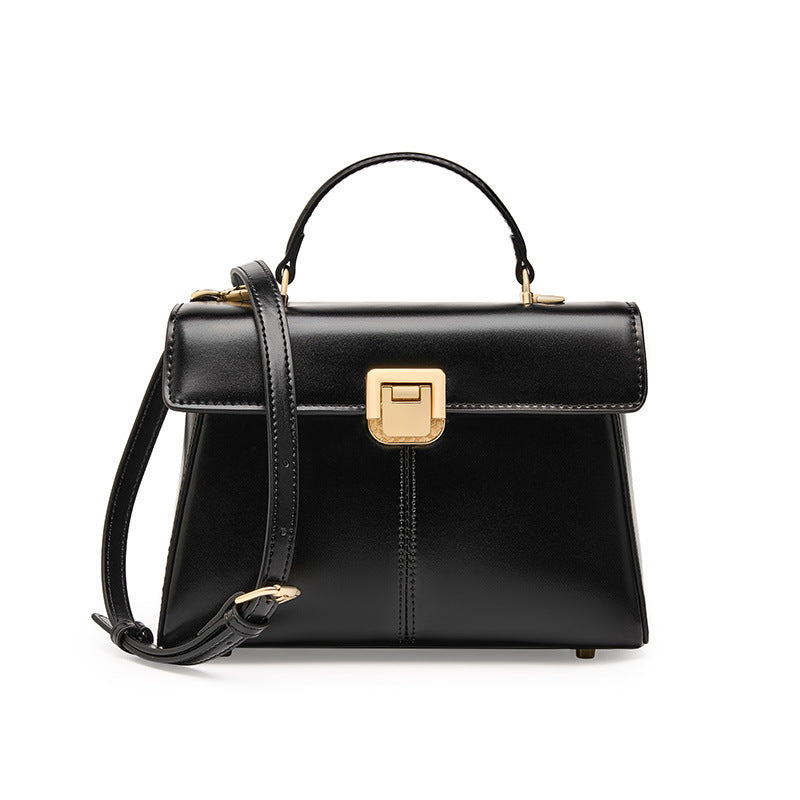
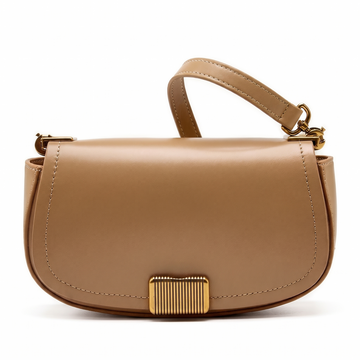
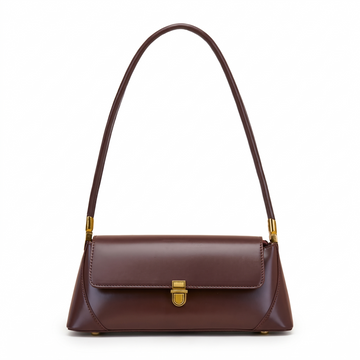
Second strength: structure. It holds its shape, which makes it an ideal leather for structured bags. Worked thinner or softer, it also suits gentle shapes. The same leather can thus produce a large semi-rigid square bag like CAMEO L, or a soft bag like EMY, with its delicate pleats.
Third strength: longevity and patina. Well cared for, a cowhide leather bag will stay with you for a long time and grow more beautiful over time, as we explain in our article on leather patina. Finally, it repairs well: seams, corners and colour can be restored.
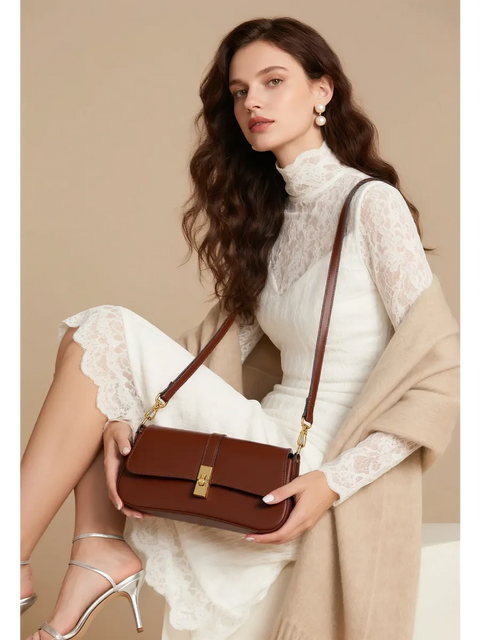
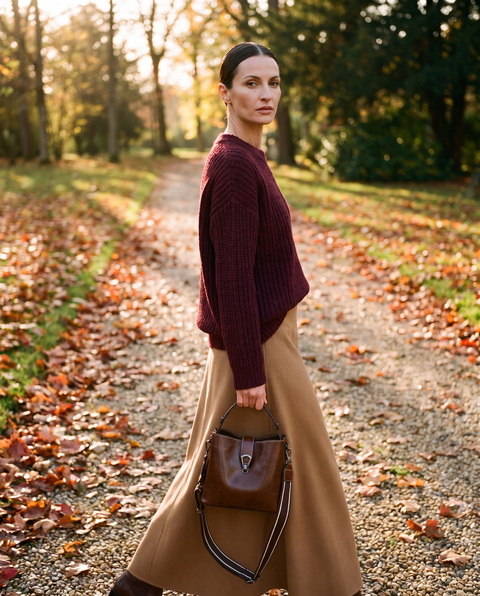
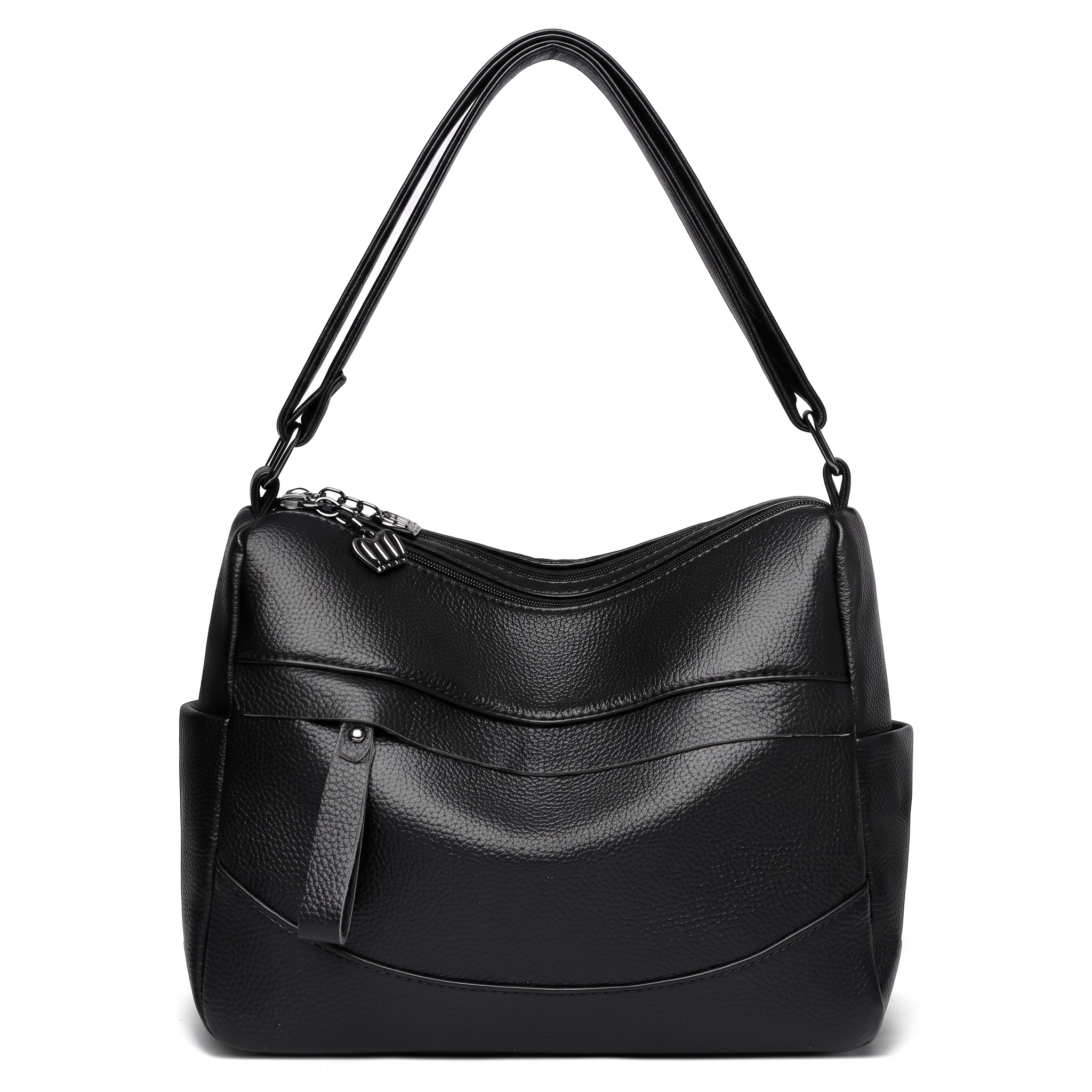
Cowhide leather comes in many finishes. Smooth leather offers a soft, slightly shiny, very elegant surface. Pebbled leather, with a natural or embossed texture, is more scratch-resistant, ideal for an everyday bag.
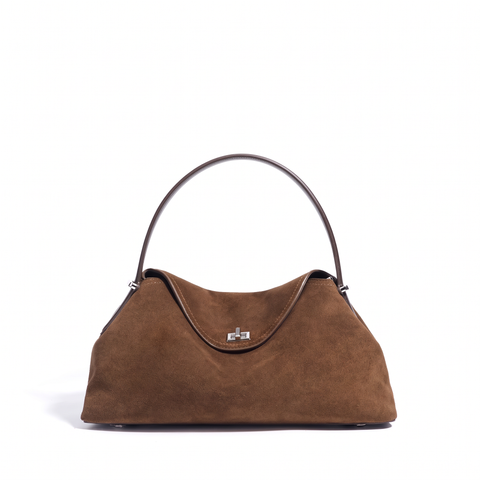
Cowhide leather can also be suede when its flesh side is worked, patent for a glossy effect, or embossed to imitate rarer skins. Each finish changes its look, feel and care.
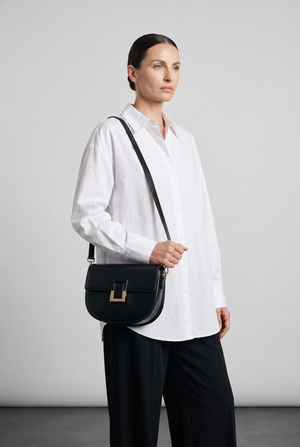
As for colours, it takes dye very well: black, caramel, brown, beige, but also wine red, green, pink, yellow or white. That is why most of our cowhide leather bags come in several colours, like NOÉMIE, available in seven colours.
Compared with calfskin, cowhide is a little less fine and silky, but stronger and more affordable. Compared with lambskin, extremely soft but fragile, it is far better suited to daily use. Compared with goatskin, light and pebbled, it offers more structure for structured bags.
Compared with faux leather, the difference is even clearer: cowhide develops a patina, breathes and can be repaired, whereas synthetics end up cracking or peeling. Our comparison of leather types covers faux leather and the other alternatives to leather.
In short, cowhide leather is neither the most luxurious nor the rarest, but it is probably the most balanced for a bag carried every day: robust, versatile and affordable.
Cowhide leather is easy to live with, but it deserves a little care. Regular dusting with a soft cloth, gentle cleaning with a dedicated leather product every one to two months, nourishing every two to three months and waterproofing before the bad weather are enough to keep it beautiful.
Avoid direct heat (radiator, hairdryer), household products and alcohol, which dry out leather. If your bag gets wet, let it dry naturally, stuffed with paper. For light leathers, always test products on a hidden area.
All these steps are covered in our step-by-step guide to caring for a leather bag. With them, your cowhide bag will stay with you for a long time.
Cowhide leather has become the benchmark in leather goods for a simple reason: it combines strength, structure, versatility, longevity and a reasonable price. Smooth or pebbled, structured or soft, it suits every style of bag and develops a lovely patina over time. Many of our styles are made of cowhide leather; the material is specified on each product page in the handbags collection. To learn everything about genuine leather, reread our complete guide.
Yes, it is genuine leather, from the hide of adult cattle.
Yes, it is one of the strongest leathers used in leather goods, ideal for an everyday bag.
Calfskin is finer, smoother and more delicate; cowhide is thicker, sturdier and more affordable.
Yes, over time it develops a patina that enriches its colour and sheen.
Dust it regularly, clean it with a gentle product, nourish it every two to three months and waterproof it before winter.
Parent article: the different types of leather. Main article: genuine leather bags. All the articles: leather and its care.