Cart
0
You may also like
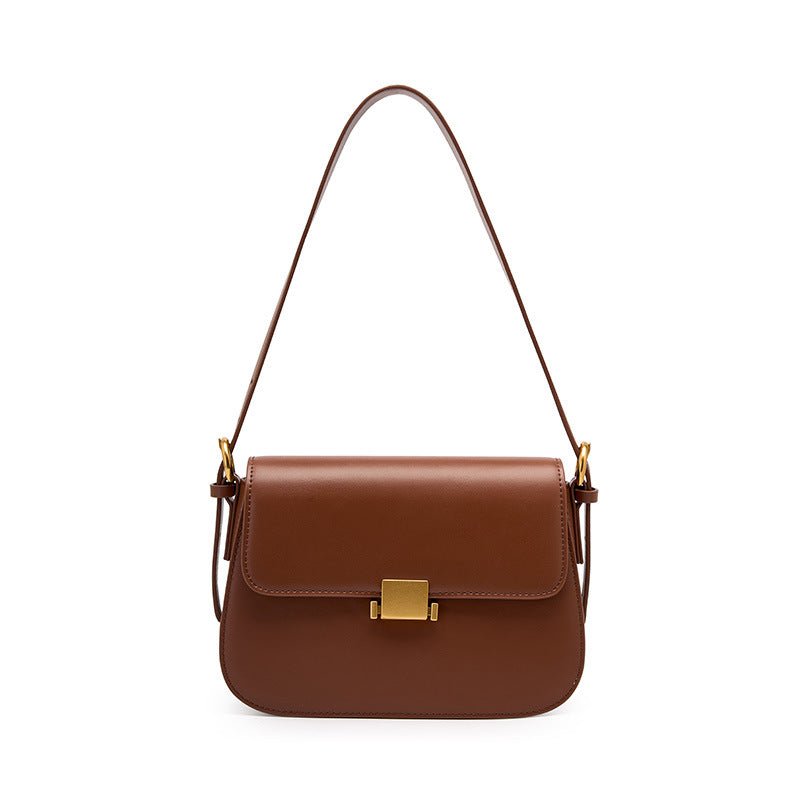
ELENA – Women's Small Leather Top-Handle Bag, Square Clasp, Crossbody
Regular price
90,00 €
+ Add to Cart
Par façon de porter
 Porté main
 Porté épaule
 Bandoulière
Par taille et forme
 Mini sacs
 Maxi sacs
 Cabas
Cabas Sacs seau





A well-cared-for leather bag can last ten years or more without losing its looks. A neglected bag dries out, dulls, cracks at the folds and stains in the first storm. The difference between the two is not hours of care, but a few simple habits repeated at the right time.
This step-by-step guide, part of our "Leather" series, explains how to care for a leather bag: everyday habits, cleaning, nourishing, protecting and storing. To get to know your leather before caring for it, also read our comparison of leather types and our genuine leather bag guide.
Care starts with good habits. Do not overload your bag: an overfull bag loses its shape and pulls on its seams and handles. Put it down on a clean surface rather than on the floor, especially on public transport or in restaurants; a bag hook or the back of a chair are your allies.
Keep pens and cosmetics in a pouch: an ink or foundation leak leaves stains that are very hard to remove from the lining and sometimes from the leather. For the same reason, avoid putting on perfume or hand cream just before handling a light leather bag.
Finally, a wipe with a soft, dry cloth once a week removes dust, which eventually dulls the leather and gets into the grain. It is the simplest and most effective habit there is.
Every month or two, or as soon as the bag looks dirty, give it a gentle clean. Start by emptying the bag and shaking it upside down to remove crumbs and dust from the lining; a quick go with a vacuum cleaner and a brush attachment can help.
For the outside, use a dedicated leather cleaner (leather cleansing milk, glycerine soap or a specific cleaner). Apply it with a soft, slightly damp cloth, in small circular movements, without rubbing hard. Then wipe with a clean cloth and let it air-dry. Absolutely avoid household products, alcohol, acetone or scented baby wipes, which dry out and discolour leather.
Always test a new product on a hidden area (under the flap, at the back, under a handle) and wait a few hours before treating the whole bag. This is particularly important on light leathers such as white, beige or cream.
Leather is a living material that gradually loses its natural oils. Without replenishment, it dries out, dulls and eventually cracks at the folds. The solution: a nourishing cream or balm suited to smooth leathers, applied every two to three months for a bag carried regularly, and whenever the leather looks dry or dull.
Apply the product to a clean, dry bag, in a thin layer, with a soft cloth, focusing on the most-used areas: handles, corners, flap edges. Leave it to soak in for about fifteen minutes, then buff with a clean cloth to remove the excess. Too much product makes the surface greasy and attracts dust: several thin layers are better than one thick one.
Smooth cowhide leather, like that of MILAN SPRING, responds very well to this care: it regains suppleness and shine, and its patina becomes more beautiful. We will cover products and frequency in a dedicated article.
A leather waterproofing spray creates an invisible barrier that limits water, rain and grease marks. Apply it when you buy the bag, then at the start of autumn and before winter, about twenty centimetres from the bag, in a light, even layer, in a ventilated room. Let it dry completely before using the bag.
If your bag gets wet, do not panic: gently blot the water with an absorbent cloth, without rubbing. Stuff the inside with paper (not newspaper, whose ink can transfer) so it keeps its shape, and let it dry at room temperature, away from any heat source. Radiators, hairdryers or direct sun dry out and harden leather. Once dry, nourish it.
For stains (grease, ink, make-up), act quickly and gently. Each stain has its solution, which we cover in an article in the series dedicated to repairs.
A bag often spends more time stored than carried. To keep its shape, empty it and stuff it with tissue paper or a small cushion. Store it upright, without crushing it under other bags or clothes, and without hanging it by its handles for long periods, as they could lose their shape.
Slip it into a fabric dust bag (cotton or linen): it protects from dust while letting the leather breathe. Avoid plastic bags, which trap moisture and encourage mould. Store it away from direct light, which can fade colours, and from damp.
If your bag has a leather strap, detach it and roll it up without folding, to avoid marks. For long-term storage (change of season), nourish the leather before putting it away and take it out from time to time to air it.
Caring for a leather bag comes down to five steps: good everyday habits, regular gentle cleaning, nourishing every two to three months, waterproofing before the bad weather and careful storage. A few minutes a month are enough to extend your bag's life by several years and watch its patina grow more beautiful. To discover our cowhide leather bags, browse the all bags collection, and to choose a bag that will last, reread our 7 criteria for a quality bag.
A gentle dedicated leather cleaner for cleaning, a nourishing cream or balm for smooth leather, and a waterproofing spray for protection.
Dust it every week, clean it every one to two months, nourish it every two to three months and waterproof it twice a year.
It is not recommended: its composition (fragrance, alcohol, additives) is not suited to leather and can stain it. Use a dedicated product.
Blot without rubbing, stuff it with paper and let it dry at room temperature, away from any heat source. Nourish it once dry.
Empty, stuffed, upright, in a fabric dust bag, away from light and damp.
Main article: genuine leather bags: what to know before you buy. Also read: the different types of leather. All the articles: leather and its care.