Cart
0
You may also like
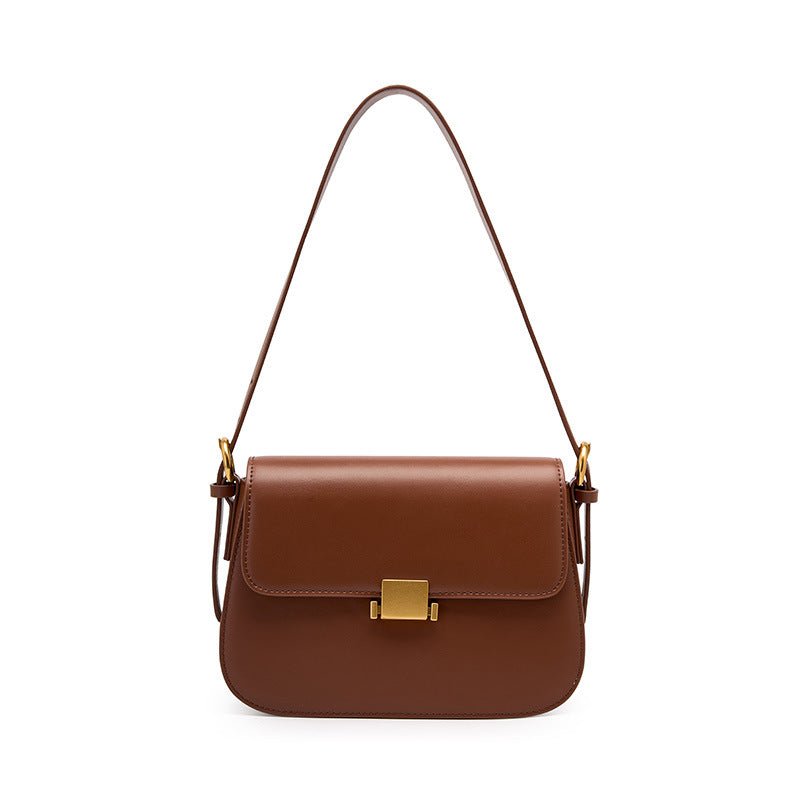
ELENA – Women's Small Leather Top-Handle Bag, Square Clasp, Crossbody
Regular price
90,00 €
+ Add to Cart


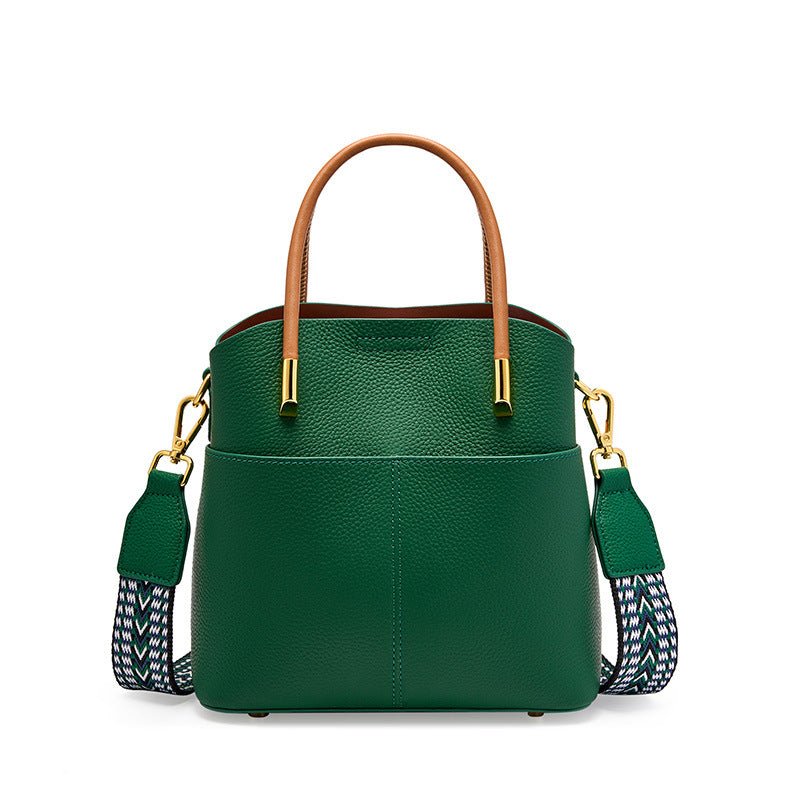
Two bags can look identical in a photo and have nothing in common once in your hands. One will keep its shape and colour for years; the other will show its first weaknesses after a few weeks: a seam that gives way, an edge that frays, a zip that catches, a handle that cracks. The difference lies in details we never learn to look at.
This article from our "Buying guide" series gives you a simple method for recognising a quality handbag, in store or online, using seven concrete criteria. It complements our complete guide to choosing a handbag.
Criterion 1: the material. It is the foundation of quality. Genuine leather, ideally cowhide, full grain or well-made corrected grain, will age well and develop a patina. A coated split or a low-end faux leather will end up cracking or peeling. The product page should clearly state the material; a seller who is vague on this point should put you on alert.
In store, touch the leather: it should be supple and warm to the touch, with a slightly irregular grain and visible pores. A cold, plastic feel and a perfectly regular pattern often betray a synthetic. Finally, smell does not lie: leather smells of leather.
To understand the different qualities of leather, read our comparison of leather types for handbags and our genuine leather bag guide.
Criterion 2: the stitching. It should be regular, tight and straight, with no loose threads or skipped stitches. A high number of stitches per centimetre is generally a sign of care. Look particularly at the stress points: handle attachments, corners, strap fixings. That is where low-end bags give way first.
Criterion 3: the edges of the leather. On a well-made bag, they are either folded (turned inwards and stitched) or dyed and smoothed with a clean, even finish. Raw edges that fray, or that reveal a fabric layer under a film, indicate reconstituted leather or a sloppy finish.
Visible stitching can even become a style feature in its own right when perfectly executed: that is the case with MILLER, LOON or MYA and its fine stitching.
Criterion 4: the hardware. Clasps, buckles, rings, snap hooks, rivets: these parts should be heavy, well finished and firmly attached. Metal that is too light and sounds hollow, or plating that chips in the first few days, are bad signs. Strap snap hooks should open and close cleanly, without play.
Criterion 5: the closures. A quality zip slides effortlessly and without catching along its whole length. A magnetic clasp should hold firmly; a mechanical clasp (turn-lock or clip) should engage precisely. Test them several times: they are the most heavily used parts of the bag.
On the bags in our Devotion line, like ELENA or LUMIA, the clasp is designed like a piece of jewellery while remaining a functional everyday mechanism. We will devote a full article to the different types of closures in this series.
Criterion 6: the inside. It is often overlooked, and that is a mistake: the inside reveals a lot about the care taken in manufacturing. The lining should be well stretched, without creases or bubbles, and firmly stitched. Its inner seams should be as clean as the outer ones.
Compartments should be designed for use: a zip pocket for valuables, one or two slip pockets for the phone and small items, possibly a document pocket. SIMEON, organised around a zipped central compartment and a zip pocket, or MYA, with its three inner compartments, are good examples.
Finally, check whether the base of the bag is reinforced or has small metal feet: this detail protects the leather when the bag is put down on the floor and extends its life.
Criterion 7: the structure. A quality bag keeps its shape. Place it empty on a table: a structured bag should stand without slumping, a soft bag should fall harmoniously, without sharp creases. Lift it by its handles: they should not deform or pull on their attachments.
Symmetry is also revealing: the handles should be the same length, patterns and seams aligned, sides identical. A bag that is slightly crooked when you buy it will not improve over time.
Online, where you cannot touch the bag, rely on the available clues: detailed photos (stitching, inside, edges), a precise description of the material and dimensions, customer reviews, return conditions. A seller who shows their finishing in close-up generally has nothing to hide.
Material, stitching, edges, hardware, closures, inside and structure: these seven criteria let you assess a bag's quality in a few minutes, far more reliably than its price or brand. A bag that meets them will stay with you for years; a bag that neglects several will soon disappoint you. To put these criteria into practice, examine our cowhide leather bags in the all bags collection, and continue with the articles in this series on finishing and closures.
Check the material, the regularity of the stitching, the finish of the edges, the strength of the metal parts, how well the closures work, the cleanliness of the inside and the bag's structure.
No. The price sometimes mainly reflects the brand. Manufacturing criteria are a much more reliable indicator.
The corners, handles, strap attachments and edges. Look at them carefully before buying.
Examine the detailed photos, the description of the material and dimensions, customer reviews and return conditions.
No, most quality bags have a textile lining. What matters is that it is well stretched and firmly stitched.
Main article: how to choose a handbag. Also read: which handbag size to choose. All the articles: buying guide.