Cart
0
You may also like
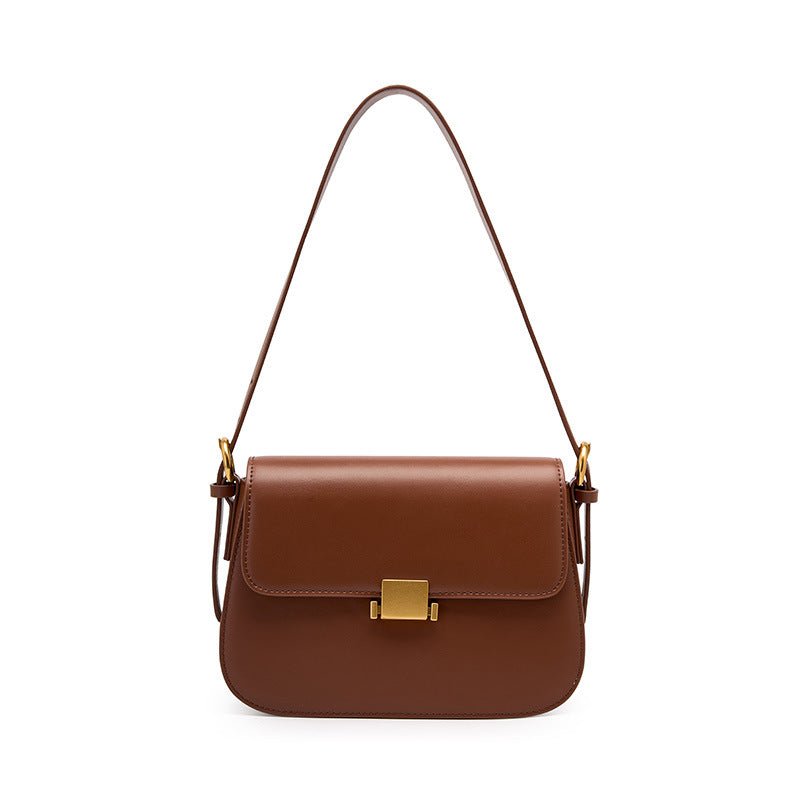
ELENA – Women's Small Leather Top-Handle Bag, Square Clasp, Crossbody
Regular price
90,00 €
+ Add to Cart


"It's smaller than in the photo." "Nothing fits in it." "It's gorgeous, but too bulky for every day." Size is the leading cause of disappointment when buying a handbag, well ahead of colour or material. And for good reason: it is hard to visualise, especially online, and depends heavily on your daily life.
This guide helps you work out which handbag size to choose based on what you carry, your typical day and your figure. It is part of our "Buying guide" series, whose main article, how to choose a handbag, lays the foundations.
Bags are generally grouped into three categories. Small bags or mini bags are usually under 20 to 22 cm wide. They hold a phone, a card holder, keys, a lipstick and a few small items. Perfect for going out, they do not replace an everyday bag for most women.
Medium bags, roughly between 22 and 32 cm, are the most versatile. They hold a standard wallet, a small pouch, glasses, keys, a phone and sometimes a small water bottle. This is the ideal size for a single bag or an everyday bag. Bags like LISA or GABBI, with their spacious interiors, fall into this category.
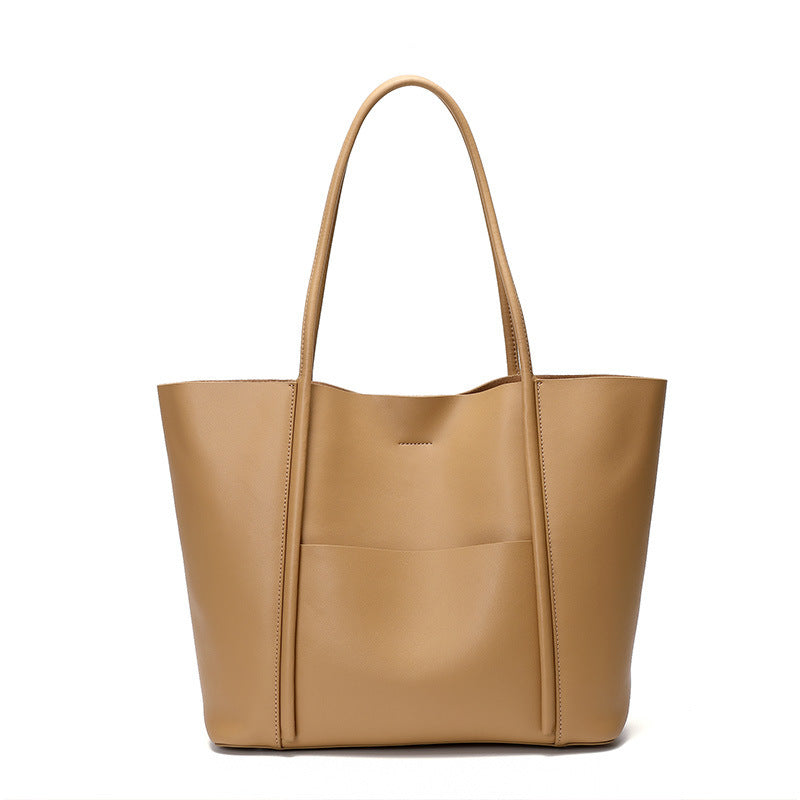
Large bags, over 32 cm, include maxi bags, totes and carryalls. They can hold a laptop, files, a jumper, a water bottle, a full make-up bag. Find them in our large bags collection. These dimensions are a guide: depth and shape also have a huge effect on real capacity.
The most reliable way to choose the size is also the simplest: empty your current bag and spread out its contents. Sort the items into three groups: those that come with you every day (phone, wallet, keys), those that often come with you (glasses, pouch, earphones, water bottle) and occasional ones (laptop, book, change of clothes).
If the first group is enough for most of your days, a small or medium bag will be perfect. If the second group is essential, go for a medium bag with good depth. If you regularly carry a laptop or files, only a large bag will do, ideally structured to protect your equipment.
Also think about the shape of your items. A long continental wallet does not fit in every medium bag, a 15-inch laptop requires a precise minimum width, a water bottle needs height. Always check the inner dimensions on the product page and compare them with your items using a tape measure. That simple step avoids most returns.
Your schedule matters as much as the contents. An office and commute day calls for a medium to large bag, able to carry a laptop or tablet, but not so heavy that it tires your shoulder on the underground. A day on foot in town is easier with a medium cross-body bag that does not restrict your movements. An evening out needs only a small bag.
If your days are very varied, the solution is often to combine two sizes: a large bag for work, into which you slip a small bag that you take out alone in the evening. It is the favourite strategy of many working women, and it saves carrying the whole day's weight to dinner.
Finally, beware of the "bag too big" effect: the bigger the bag, the more we tend to fill it. A slightly smaller bag forces you to sort things out, and your back will thank you.
The size of the bag interacts with your body shape. As a general rule, a bag in proportion to your build flatters the silhouette. A short or petite woman will quickly be "swallowed" by a very bulky tote; a medium bag or a long bag worn short under the arm will be more flattering. A tall woman can easily carry generous bags, which balance her silhouette.
The height at which the bag is worn also counts: a bag that falls at hip level visually widens that area, while a bag worn higher, under the arm or by hand, draws the eye to the upper body. For figures that want to lengthen their line, a bag worn short is often ideal.
We explore these principles further in two articles in this series on body shape and on petite women. For now, remember this: the right bag should balance your silhouette, not dominate it.
For a single bag, choose a medium, convertible size with a removable strap: it is the safest compromise. MILAN SPRING, our signature piece, or SIMEON, semi-rigid and zipped, fit this use.
For a work bag, go for a large structured bag with inner compartments, like CAMEO L or GRACE, which holds a laptop. For an evening or weekend bag, a small size like ELENA or MANAROLA is more than enough.
If you hesitate between two sizes, ask yourself: "Will I carry it full or half empty?" A bag carried full should be chosen in the larger size; a bag often half empty in the smaller size, so it keeps a nice shape.
Choosing your handbag size means honestly observing your habits: what you carry, where you go, how you get around. The convertible medium size remains the safe bet; the large size is a must for work; the small size ideally completes your wardrobe for going out. Measure your items, compare them with the inner dimensions, and you will avoid an unpleasant surprise on delivery. To compare sizes, browse all our bags or discover the shapes in our guide to the different types of handbags.
There is no official standard, but a medium bag is generally between 22 and 32 cm wide. It is the most common size for an everyday bag.
You need a large bag whose inner dimensions are slightly larger than your laptop. Measure it and check the product page before buying.
Not in itself, but we tend to overfill it. Lighten it regularly and switch shoulders, or opt for cross-body wear, which spreads the weight better.
A small to medium size, worn short on the shoulder or by hand, is generally the most flattering. Avoid very large totes that overwhelm the figure.
Compare the dimensions on the product page with a bag you already own, or mark them out with a tape measure. Also look at the photos of the bag being worn.
Main article: how to choose a handbag. All the articles in the series: handbag buying guide.