Cart
0
You may also like
By how you carry it
 Handheld
 Shoulder bags
 Crossbody
By size and shape
 Mini bags
 Large bags
 Totes
Totes Bucket bags


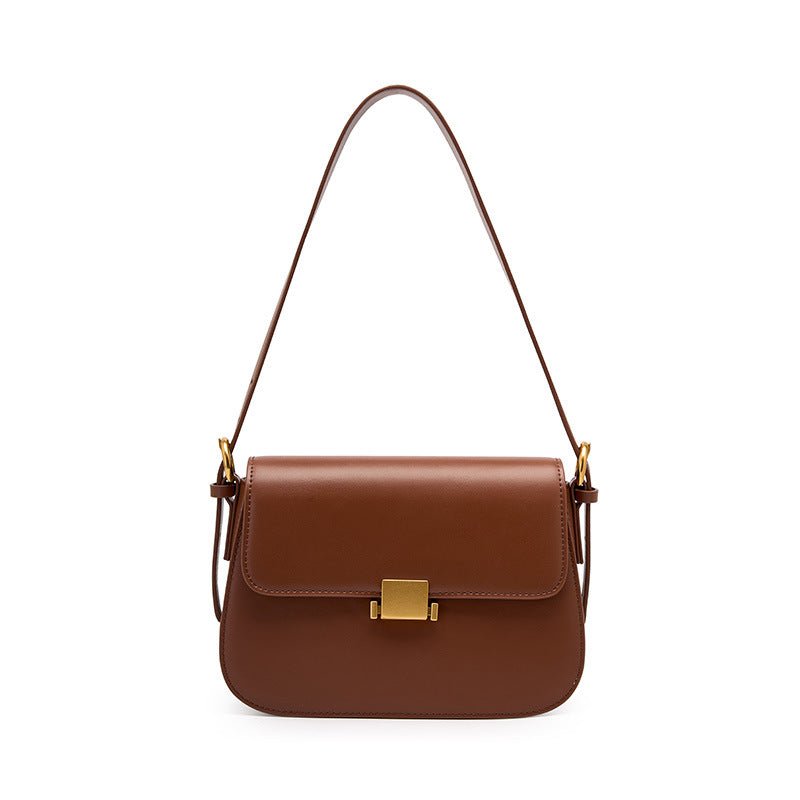
A scratch on the flap, a pen mark in a corner, an edge starting to fray, a handle losing its shine: sooner or later, every leather bag carried regularly shows a few signs of life. The good news is that leather is a material that repairs remarkably well. Many small marks fade with the right moves, and the bigger ones can be entrusted to a professional.
This article from our "Leather" series explains how to repair a leather bag: scratches, scuffs, stains, discolouration, worn corners, and when to call on a cobbler or leather craftsman. To prevent this damage, reread our step-by-step guide to caring for a leather bag.
Before touching your bag, identify the type of leather: smooth, pebbled, patent, suede or nubuck. Each leather reacts differently to products and rubbing. A move that is perfect on smooth leather can permanently damage suede. If in doubt, check the product page or our comparison of leather types.
Then always test your product or technique on a hidden area: under the flap, at the back, under a handle, inside a gusset. Wait a few hours, or even overnight, to check there is no ring mark, discolouration or change of texture.
Finally, act gently. Most irreversible damage comes from an over-vigorous repair: intense rubbing, harsh products, too much water. Several light passes are better than one rough move.
Surface scratches on smooth leather are the most common damage, and the easiest to reduce. Often, simply rubbing the scratch gently with a fingertip, in small circular movements, is enough: the warmth and natural oils of the skin redistribute the leather's oils and fade the mark. It works particularly well on supple, oily leathers.
For slightly deeper scratches, apply a small amount of colourless nourishing cream to the area, let it soak in for a few minutes, then buff with a soft cloth. The nourished leather swells slightly and the scratch blends into the surface. Repeat if necessary.
For deep scuffs or areas where the colour has gone, a tinted renovating cream in the same colour as your bag lets you recolour the area. Apply it in a very thin layer, let it dry, then buff. With pebbled leathers, remember that their texture naturally hides most small scratches: that is one of their great everyday advantages.
When faced with a stain, speed is crucial. A water stain is treated by lightly dampening the whole affected panel with a barely damp cloth, to avoid a ring, then letting it dry naturally. A grease stain (oil, cream, food) should immediately be covered with talc or fuller's earth, left to absorb for several hours before brushing off gently.
Ink stains are trickier: on smooth leather, a specific leather ink remover is recommended, applied carefully. Avoid alcohol and acetone, which remove the leather's colour along with the ink. Make-up stains can generally be treated with a leather cleansing milk.
Each stain has its method, which we will cover in a dedicated article in this series. The general rule: blot without rubbing, do not soak, and never use household products.
Corners are the first areas to wear, as they rub against surfaces and clothes. When the colour fades, a tinted renovating cream restores a clean look. If the leather is scuffed through or open, a leather craftsman can refresh or reinforce it.
The edges (dyed edges of the leather) can flake over time. A specific edge-finishing product, applied with a small brush or cotton bud, restores them neatly. It is a simple step that instantly rejuvenates a bag.
Handles, handled constantly, lose their shine and darken from contact with hands. Gentle cleaning followed by nourishing brings back their glow. If a handle is split or coming unstitched, do not wait: a seam that gives way can tear the leather around the attachment. On top-handle bags like NINA or ELENA, check these areas regularly.
Some repairs go beyond DIY. Call on a cobbler or leather craftsman for: an unstitched seam (especially at handle and strap attachments), a broken zip, a faulty clasp or ring, a torn lining, a tear in the leather, or a complete recolouring.
These repairs are generally affordable compared with the price of a new bag, and they considerably extend its life. It is one of the great advantages of genuine leather: unlike synthetics, it can be repaired, restitched and recoloured. A well-made cowhide leather bag can thus stay with you for a long time, as we explain in our genuine leather bag guide.
Before handing over your bag, ask for a quote and, if possible, show them a bag in the same leather so they can match the shades. A good professional will also tell you whether the repair is worth it.
Scratches, stains, worn corners or dull handles: most small damage to a leather bag can be repaired with a few simple moves, as long as you identify your leather, test your products and act gently. For seams, closures and tears, a professional will work wonders. That is the whole point of a genuine leather bag: you do not throw it away, you look after it. Discover our handbags; the material is specified on each product page.
Rub gently with your finger in small circles, then apply a colourless nourishing cream and buff. For a deep scratch, use a tinted renovating cream.
Yes, with a tinted renovating cream for touch-ups, or by a professional for a complete recolouring.
A tinted cream restores the colour. If the leather is open or scuffed through, take it to a leather craftsman.
Cobblers, leather craftsmen and some workshops specialising in leather goods restoration.
Yes, a professional can replace the slider or the whole zip.
Main article: genuine leather bags: what to know before you buy. Also read: caring for a leather bag and types of leather. All the articles: leather and its care.