Cart
0
You may also like
By how you carry it
 Handheld
 Shoulder bags
 Crossbody
By size and shape
 Mini bags
 Large bags
 Totes
Totes Bucket bags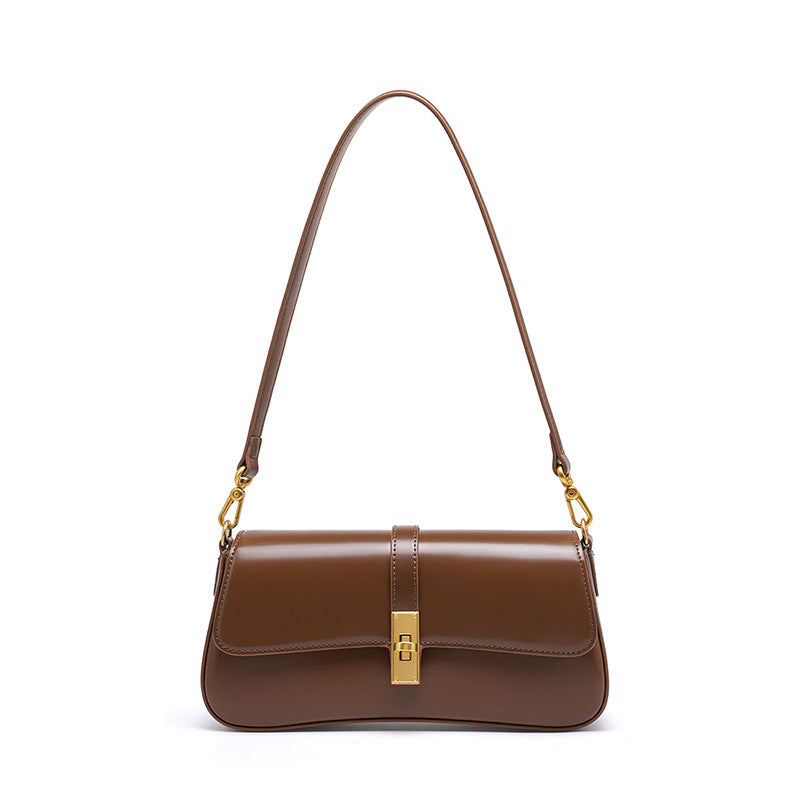


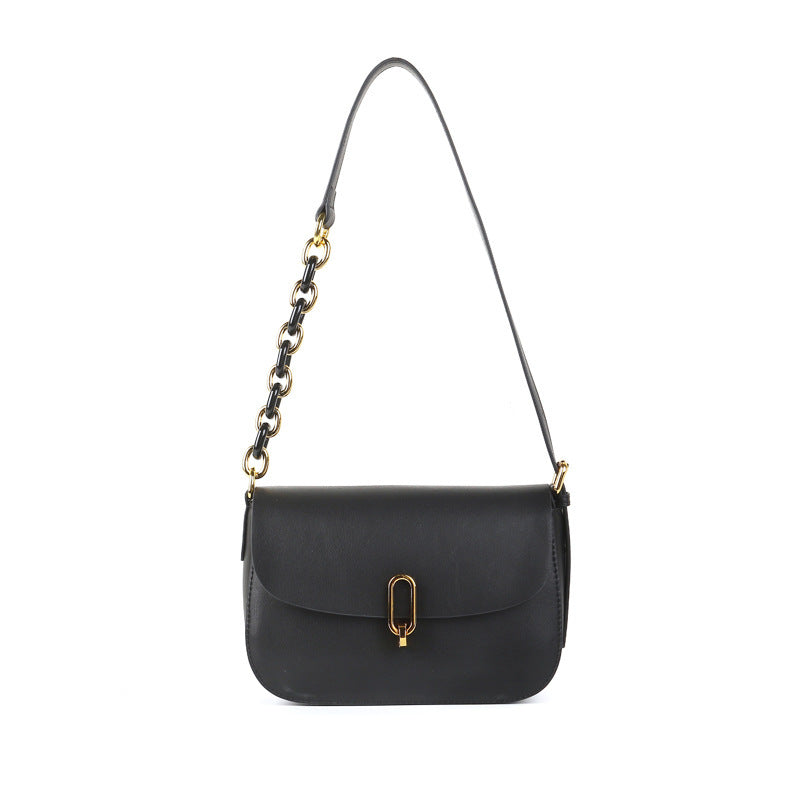
Thirty euros, a hundred euros, a thousand euros, several thousand euros: handbag prices span a dizzying scale. Faced with such differences, one question keeps coming back: how much do you really need to spend to get a quality bag? And above all, what justifies these differences? The leather? The labour? The brand? The marketing?
This article from our "Buying guide" series breaks down the price of a quality handbag: what it is made up of, the main price ranges, what you get at each level and how to think it through to make a good purchase. It follows on from our guide how to choose a handbag and our 7 criteria for a quality bag.
A bag's price is made up of several elements. First, the material: good-quality cowhide leather costs much more than a synthetic, and full-grain leather more than a coated split. The amount of leather also counts: a large tote uses far more than a mini bag.
Next comes manufacturing: time spent cutting, stitching, finishing edges and assembling. A bag with careful finishing takes several hours of work. Then the components: clasps, zips, linings, straps. Finally, the brand's costs: design, transport, storage, distribution, advertising, and of course the margin.
For the very big luxury brands, a large part of the price pays for the name, the image and the exclusivity, far more than the material and manufacturing. Conversely, brands that sell direct, without physical shops or massive campaigns, can offer genuine leather at much more accessible prices.
Under €50: mostly synthetic (PU, PVC) or fabric bags. They can be pretty and on trend, but their lifespan is generally limited to one or two seasons. The rare "leather" bags at this price are often coated split.
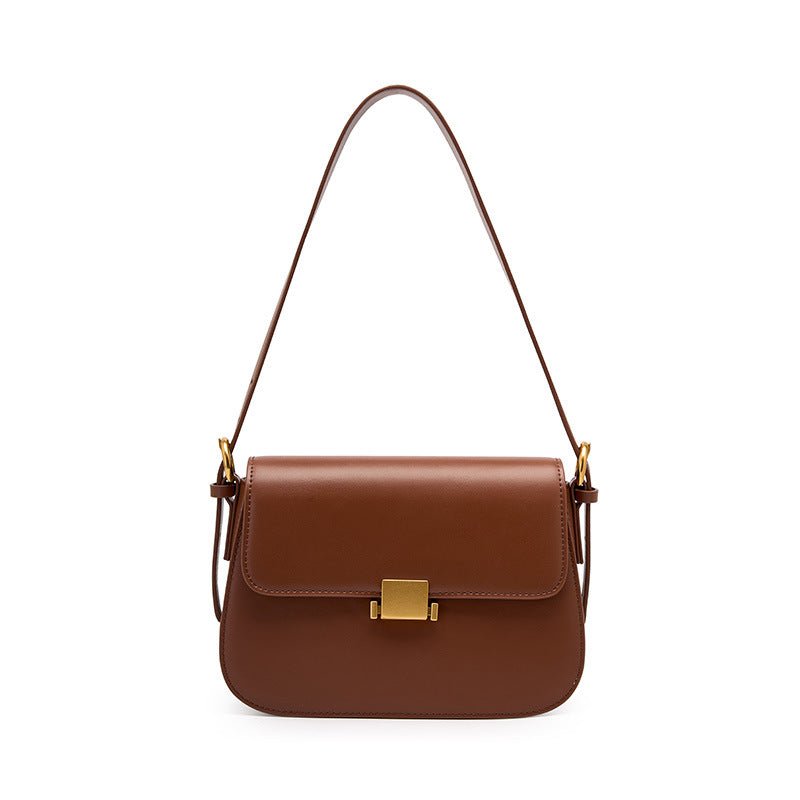
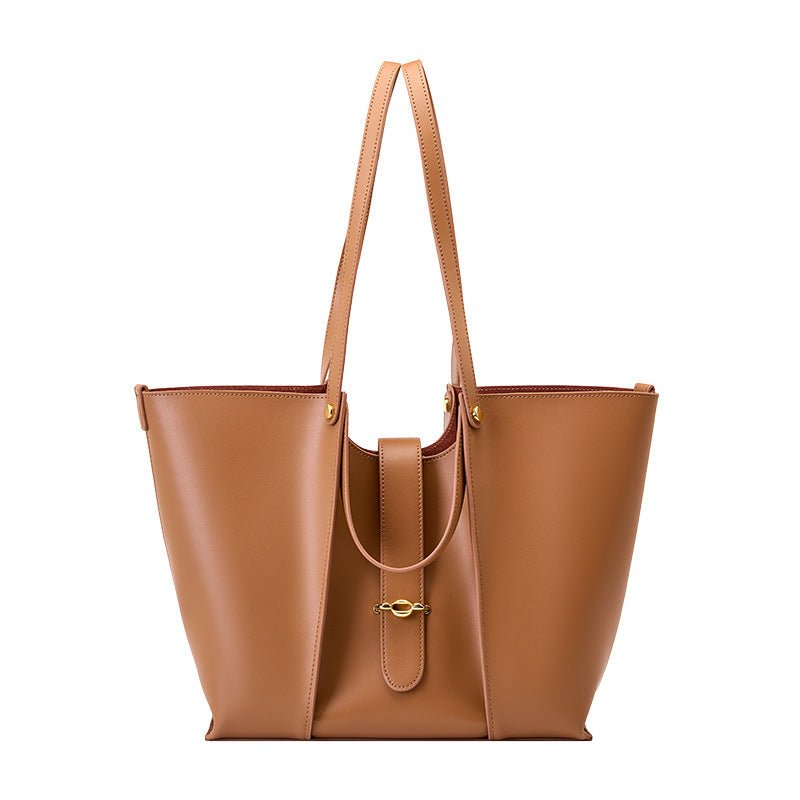
From €50 to €200: this is the range where you find well-made genuine leather bags, particularly from brands that sell direct. Cowhide leather and careful finishing are within reach here. It is the range of our bags, between €70 and €150: ELENA, LISA or NOÉMIE.
From €200 to €600: you enter the world of designer brands and "accessible luxury". The leathers may be finer and the finishing more advanced, but a growing part of the price pays for the brand. Beyond that is luxury, where artisanal craftsmanship and rarity sit alongside strong image value.
A €30 bag seems economical… until you need to replace it. The handles crack, the coating peels at the corners, the closure gives way: after a few months, it is unusable. If you buy two a year, you spend €60 a year, or €300 over five years, on bags that were never really satisfying.
Well cared for, a leather bag in this range will stay with you for a long time, and its price, spread over the number of outings, becomes very reasonable. This is the principle of cost per wear: divide a bag's price by the number of times you will carry it. A bag carried three times a week for five years, about 750 times, comes to a few cents per outing.
There is also an environmental argument: buying less but better limits waste and rubbish. A bag that lasts is a bag you do not throw away.
A price is justified when it corresponds to tangible qualities: genuine leather clearly stated, regular stitching, careful edges, smooth closures, a clean lining, solid metal parts. These criteria, which we cover in our article on a bag's quality, can be checked.
A price is suspicious when it is abnormally low for the stated material (a large "100% leather" bag at €25), or when it is very high with no visible justification beyond a logo. Also beware of vague descriptions: "premium material", "leather look", "PU leather" (which is actually a synthetic).
Finally, a seller who is transparent about materials, dimensions and return conditions inspires more confidence. To understand leather terms, see our comparison of leather types.
Start by identifying the bag's main use. An everyday bag, carried every day, justifies a bigger investment than an evening bag taken out three times a year. The bag you carry most is where your budget priority should go.
Next, set a realistic budget and look for the best possible quality within that range, rather than the best-known brand. Between €80 and €150, you can get a well-finished cowhide leather bag. Our article "A leather bag for under €150: is it possible?", coming soon in this series, will explore this further.
Finally, think about care: a nourishing product and a waterproofing spray, for around ten euros a year, considerably extend your bag's life. Our leather bag care guide explains how.
The right budget for a handbag is the one that gets you genuine leather and careful finishing, without paying top price for a brand. Between €70 and €200, this balance is entirely achievable. Think in cost per wear, check tangible quality criteria, and invest first in the bag you will carry most. Discover our handbags (the material is specified on each product page) and our best sellers.
A well-made genuine leather bag can generally be found for between €80 and €200 from brands that sell direct.
It is rare for a normal-sized bag. At this price, it is most often a synthetic or coated split.
Because they combine craftsmanship, fine materials and, to a large extent, the image and exclusivity value of the brand.
It is the bag's price divided by the number of times you carry it. A quality bag carried often costs very little per wear.
Your everyday bag, the one you will carry most often.
Main article: how to choose a handbag. Also read: recognising a quality bag and which size to choose. All the articles: buying guide.