Cart
0
You may also like
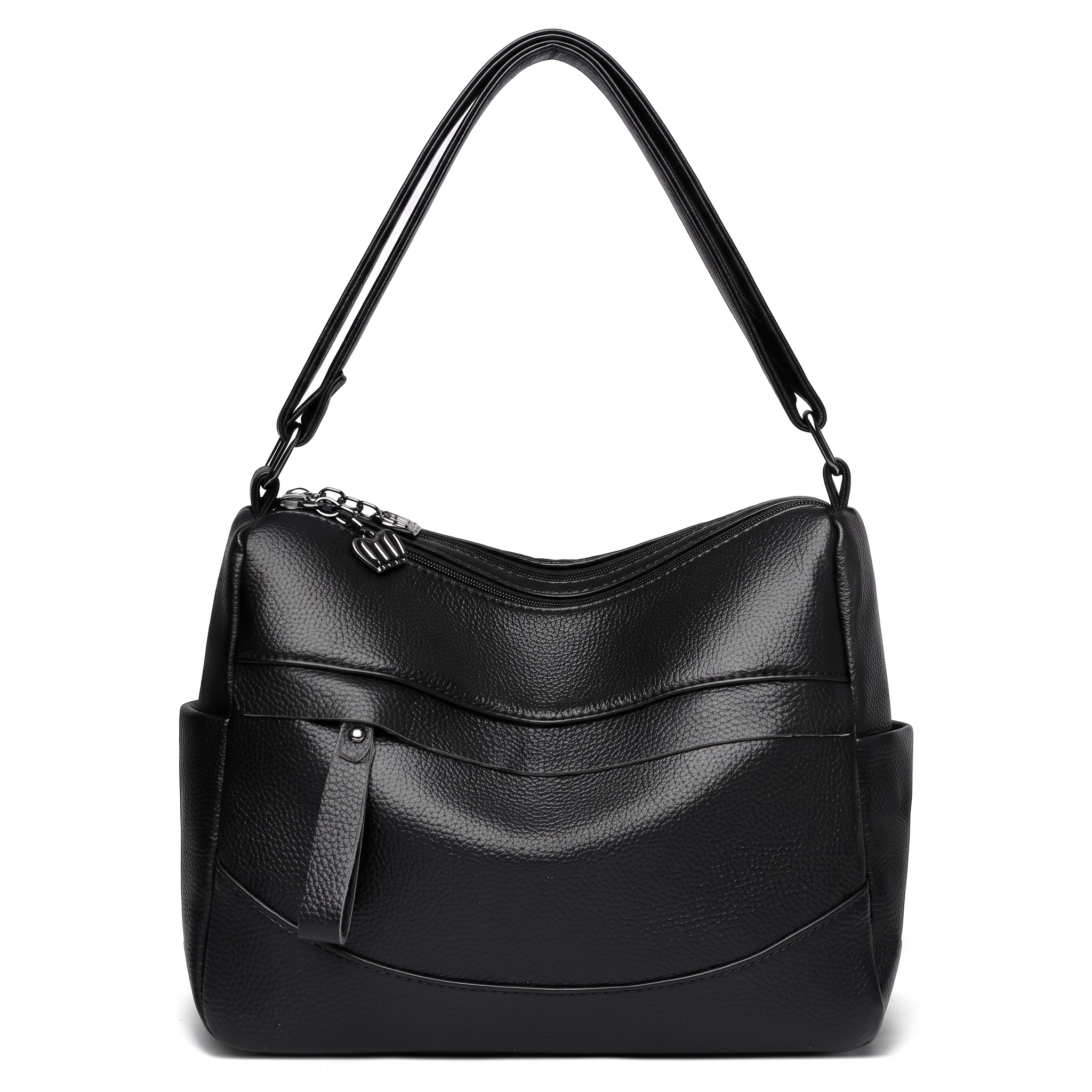
By shape
 Handbags
 Shoulder bags
 Crossbody bags
 Bucket bags
 Totes
By material
By size
 Mini bags
 Large bags
By colour
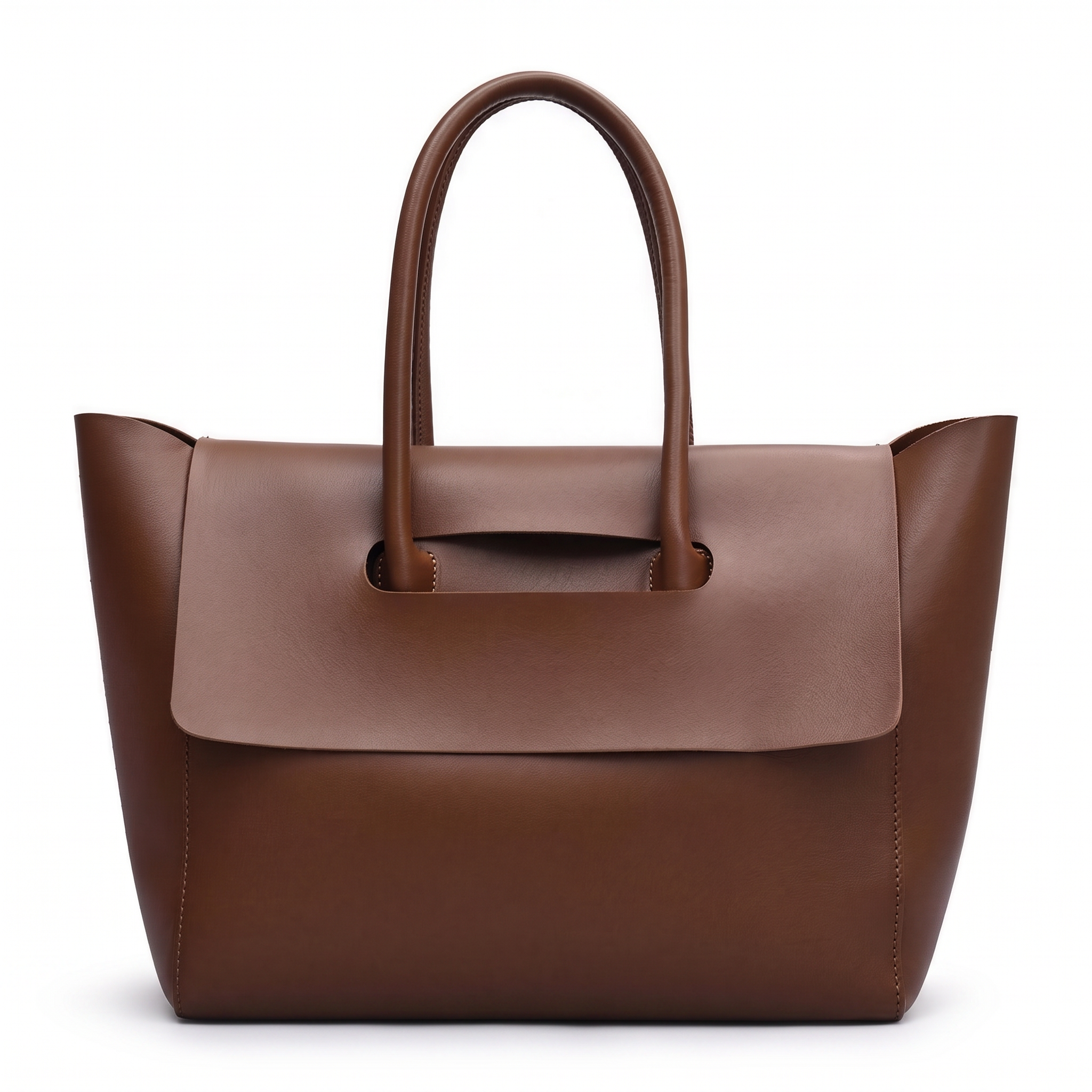
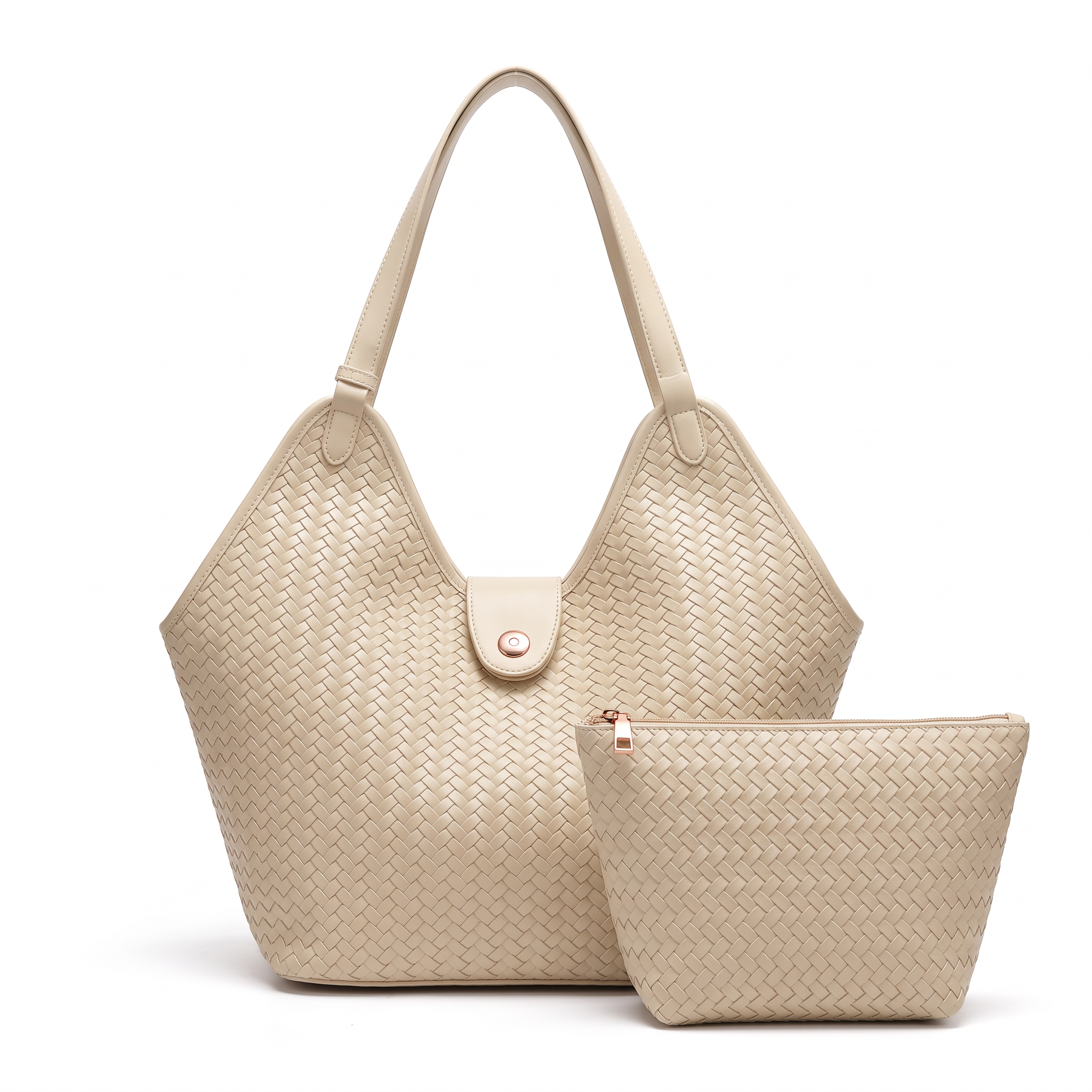
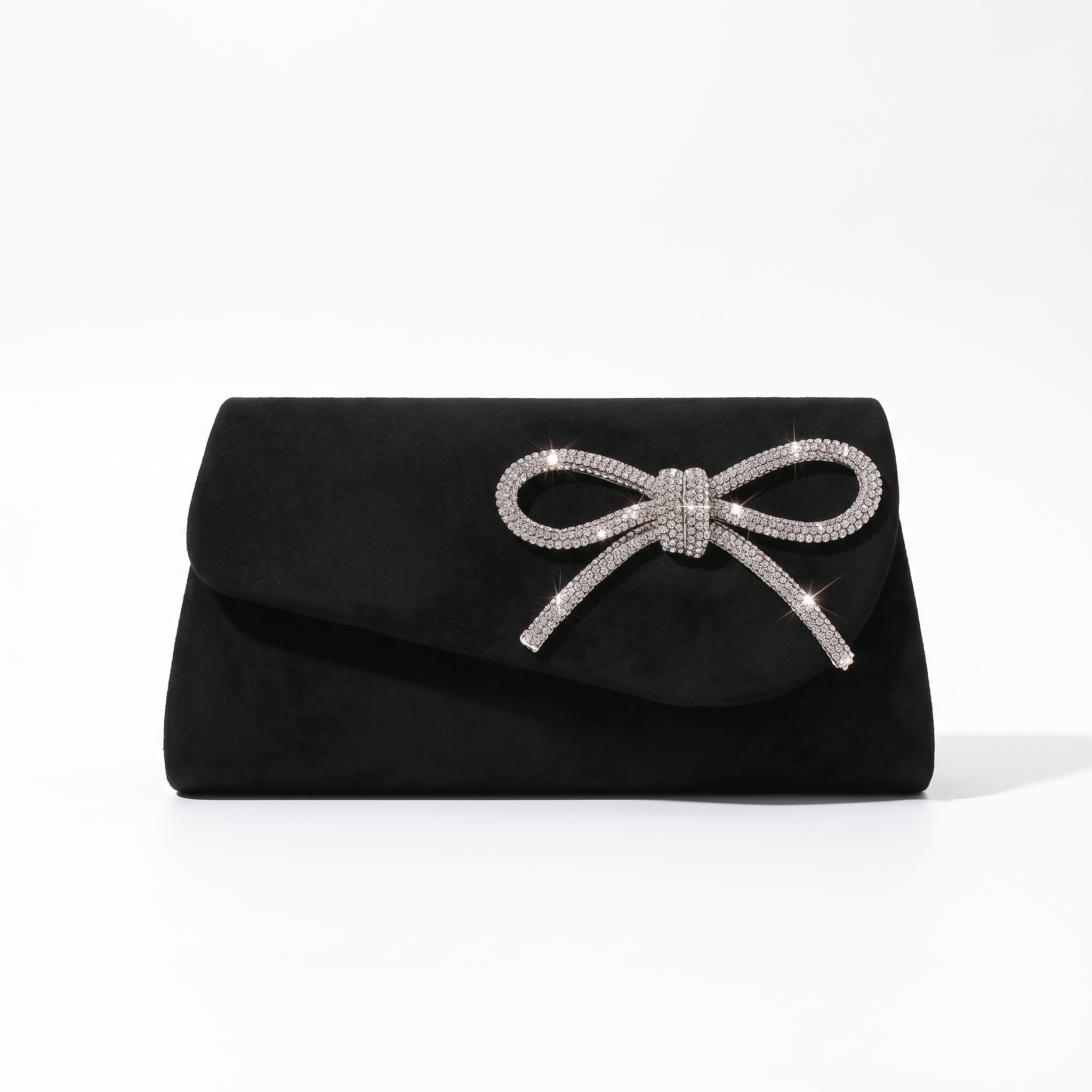

Secure payment
Browse
Most loved
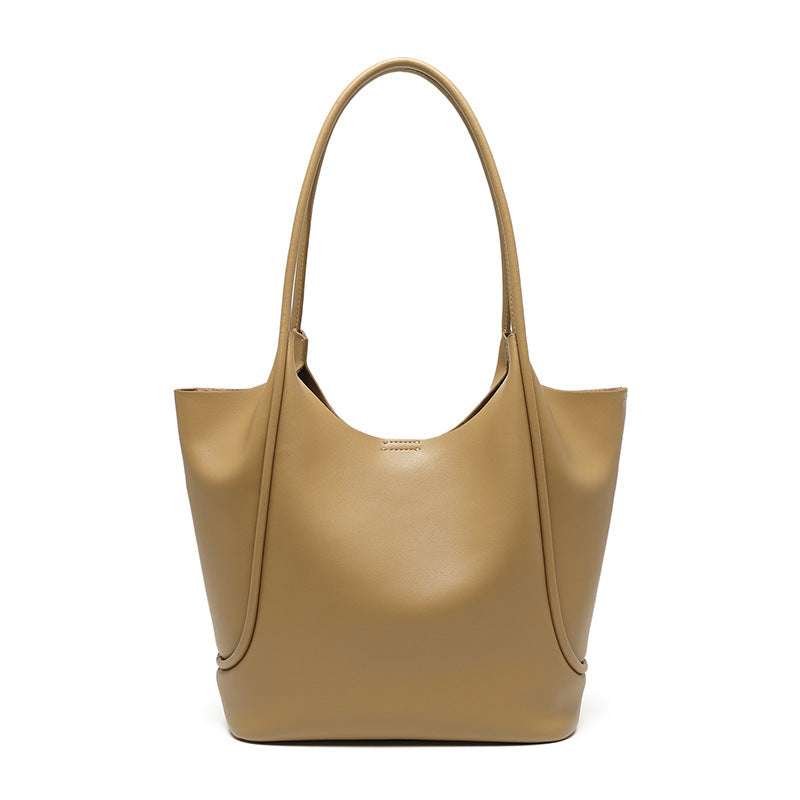
You've polished your CV, prepared your answers and chosen your outfit with care. One detail is often forgotten: the bag. Yet at a job interview it is part of the first impression. It walks into the room with you, sits beside you and opens when you take out a document. An overflowing, worn or unsuitable bag can send a signal that contradicts the message you want to give.
This article from our "Occasions" series helps you choose the right bag for a job interview: size, colour, organisation and the small details that make the difference. It expands on our article about the ideal work bag for women.
A recruiter won't judge your application on your bag, but they unconsciously pick up a set of signals. A clean, structured, tidy bag suggests organisation, rigour and attention to detail. Conversely, a bag in poor condition, overflowing, or one you rummage through at length to find a pen suggests the opposite, even if that isn't the reality.
Your bag should therefore support what you say without disrupting it. It should neither draw attention (overly bright colour, big logo, extravagant shape) nor cause awkwardness (too bulky for the chair, noisy, hard to open). The ideal is a bag that is barely noticed but conveys an impression of professionalism.
Of course, codes vary by sector: a law firm, a bank, a start-up or a creative agency don't have the same expectations. Adapt to the environment, just as you do with your outfit.
For an interview you'll need to bring: a few copies of your CV (in a folder or document holder to avoid creases), a notebook and pen, your phone (on silent), your keys, your wallet, and perhaps a small bottle of water and a discreet touch-up kit.
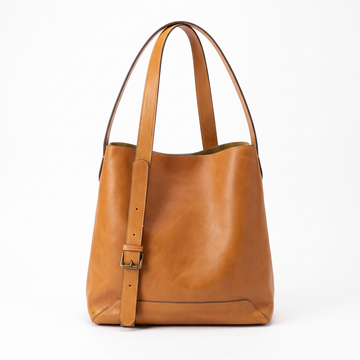
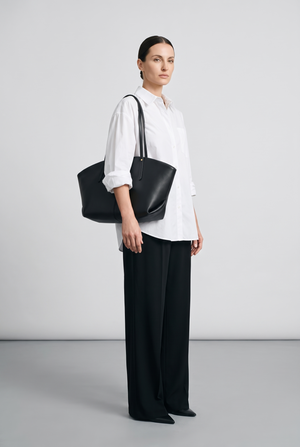
A structured medium to large bag that can hold A4 without folding documents is therefore ideal. It should stand upright when placed on the floor or on a chair. CAMEO L, a large semi-rigid square bag measuring 35 × 30 cm, fits the role perfectly. MILLER, a large 42 cm semi-rigid tote that holds its shape, with a zipped pocket and a phone pocket inside, is another excellent option.
Avoid the mini bag, which would force you to carry your documents by hand, and the very large soft tote, which slumps and looks less polished. If you need to bring a laptop to present your work, choose a large structured format like CAMEO L.
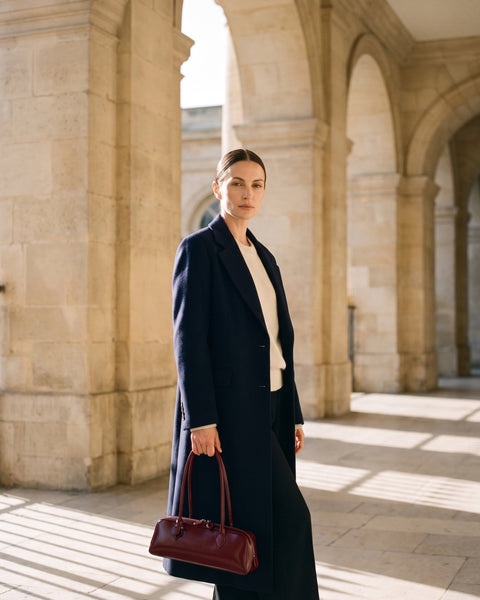
The rule is simple: understatement. Black, brown, caramel, beige and navy are the safest colours. They go with every interview outfit and project a serious image. Black is the most formal; caramel and brown are a little warmer, ideal for less strict environments.
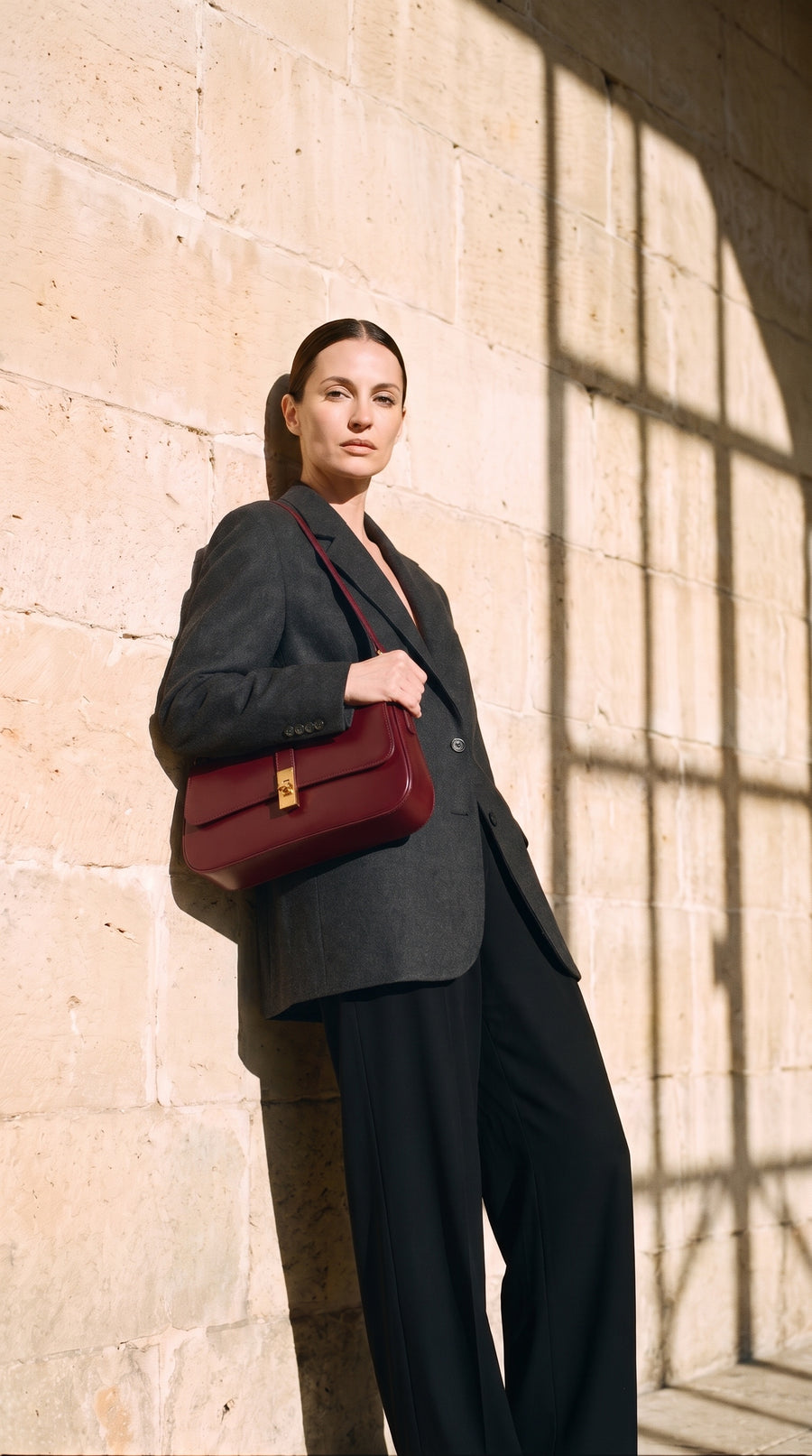
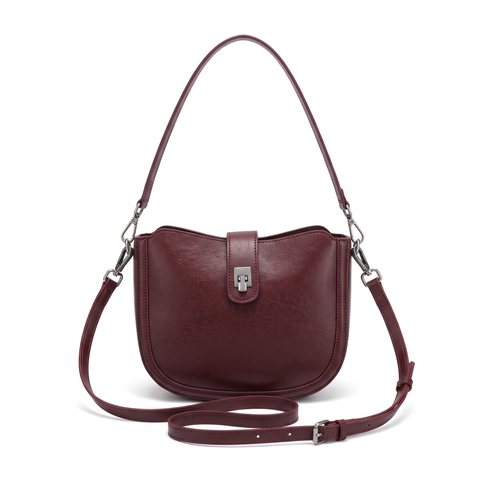
For a role in a creative sector (fashion, design, communications), you can allow yourself a little more personality: a deep colour such as burgundy or green, or a more original shape. Still, stay measured: the bag shouldn't become the topic of conversation.
As for material, smooth or lightly grained leather in good condition looks far more polished than canvas or shiny synthetics. To choose your colour, read our article which handbag colour to choose.
On the day, your bag should be perfectly organised. Pack it the night before: empty it completely, remove anything unnecessary (receipts, crumpled papers, bulky items) and put back only the essentials. Keep documents in a rigid folder or document holder so they stay pristine.
Put each item in a dedicated pocket: CV in the document pocket, phone in a slip pocket, keys and wallet in the zipped pocket, pen within easy reach. The goal: to take out your CV or notebook in two seconds, without rummaging.
Don't forget to check your bag's condition: a wipe with a cloth to remove dust, a touch of nourishing cream if the leather looks dull, a check of the corners and handles. Our care guide shows you the right steps.
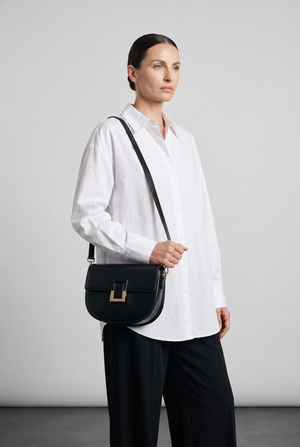
When you arrive, carry your bag in your hand or on your shoulder, not crossbody: it's more elegant and easier to take off to shake hands. If the bag has a removable strap, you can even remove it before going in and carry the bag by its handle for a more professional look.
During the interview, place your bag on the floor beside your chair, or on an empty chair if invited. Never on the table or the recruiter's desk. A structured bag that stands upright is a real advantage here: it stays clean and discreet.
Finally, when taking out a document, do it calmly and without rummaging: that's where preparing the night before pays off. A well-organised bag also spares you a little stress.
For a job interview, choose a structured medium to large bag that can hold A4, in a sober colour and leather in good condition. Pack it the night before, organise it carefully and place it discreetly on the floor during the interview. This detail will never replace your skills, but it will reinforce the professional image you want to convey. Discover our structured bags in the top-handle bags and maxi bags collections.
A structured medium to large bag in a sober colour that can hold your documents without folding them.
Black, brown, caramel, beige or navy.
On the floor beside your chair, or on an empty chair if invited. Never on the desk.
In some casual sectors, yes, but a structured leather bag remains more professional in most cases.
Several copies of your CV in a folder, a notebook, a pen, your phone on silent, your keys and your wallet.
Parent article: the ideal work bag for women. Main article: which handbag for which occasion. All the articles: the right bag for every occasion.