Cart
0
You may also like
By size
 Mini bags
 Large bags
By shape
 Bucket bags
 Handbags
 Totes
 Shoulder bags
 Crossbody bags
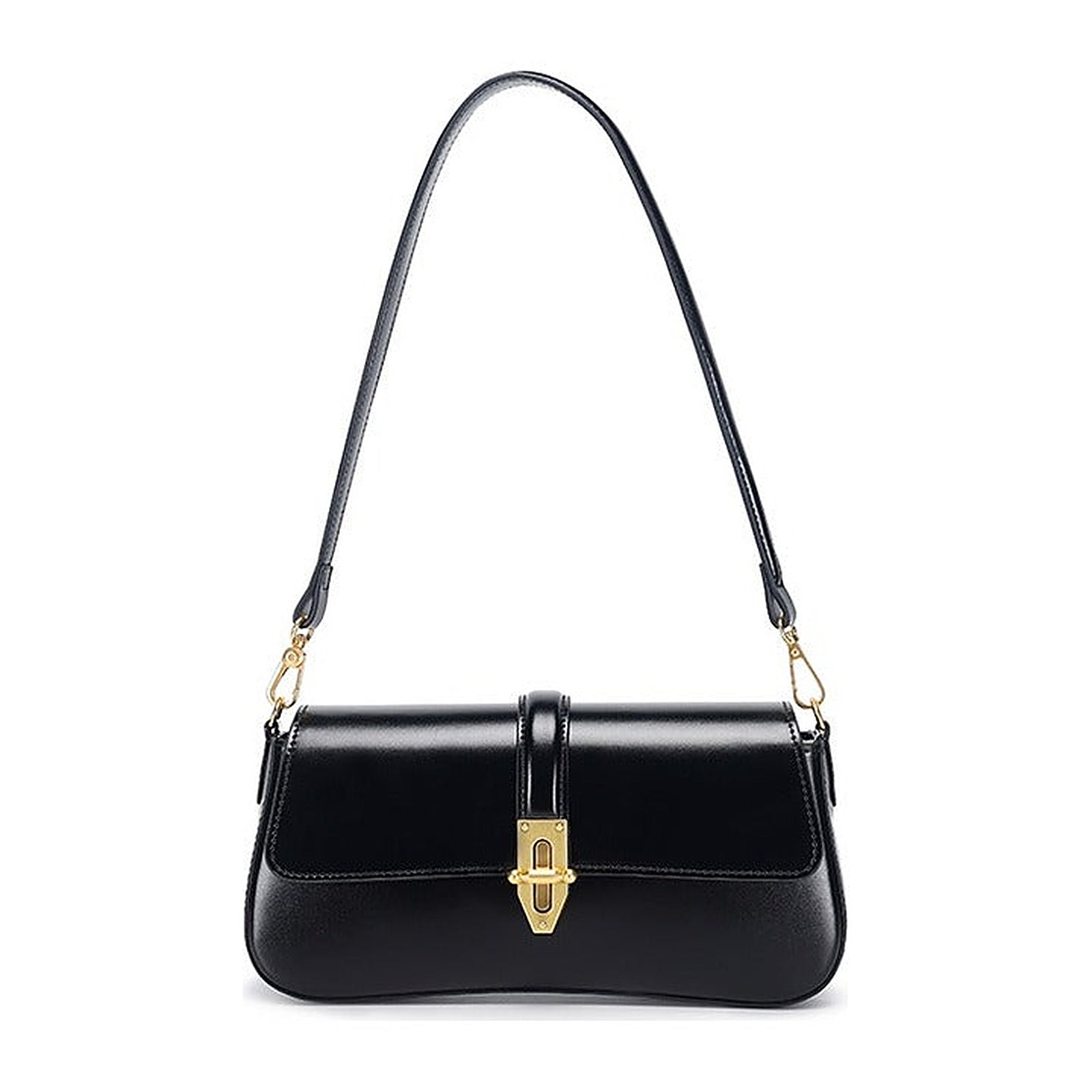
Browse
Most loved
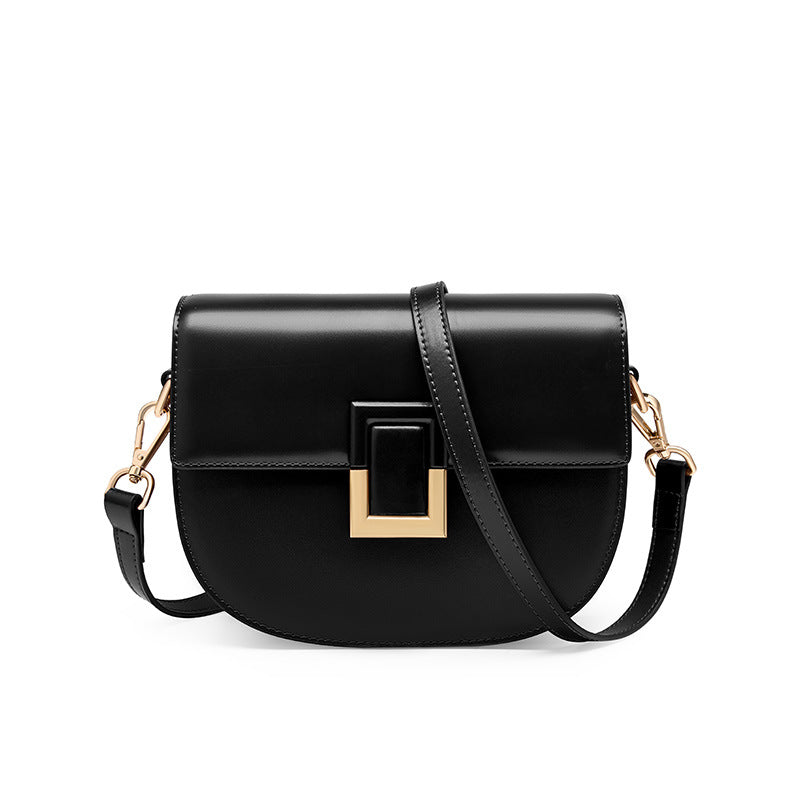
Clothes wear out, shoes get damaged, most objects lose their shine over time. Leather is the exception. A good leather bag does not age: it develops a patina. Its colour deepens, its surface takes on a soft sheen, its material softens, and it ends up bearing the unique imprint of the woman who carries it. It is one of the reasons why so many women keep their leather bag for decades.
This article from our "Leather" series explains what leather patina is, how it forms, which leathers patinate best, and how to encourage a beautiful one. For the basics, reread our genuine leather bag guide.
Patina is the natural change in leather's appearance over time and with use. It shows as a deepening of colour (the leather darkens slightly), a soft, sometimes almost glossy sheen, a softening of the material and slight variations where the bag is used most.
It has nothing to do with wear or dirt: a patinated bag is not a damaged bag. On the contrary, patina is sought after by leather lovers, because it gives leather depth, character and a unique personality. Two bags that are identical when bought will never patinate in the same way.
It is also what sets genuine leather apart from synthetic materials: faux leather does not patinate, it deteriorates. Instead of growing more beautiful, it cracks and peels. Patina is, in a way, the signature of real leather.
Patina results from several factors working together. First, light: the sun's rays slightly darken leather, especially light and natural leathers. Then, the touch of hands: the skin's natural oils nourish the leather and give it a sheen, which explains why handles and flap edges patinate faster.
Rubbing against clothes gently polishes the surface. Air and ambient humidity make the material evolve. Finally, the care you give it (nourishing creams, waxes) contributes to this transformation by enriching the leather.
Patina therefore builds up slowly, over months and years. It depends on how you carry your bag, where you live and how often you care for it. That is what makes it so personal.
Not all leathers patinate in the same way. Vegetable-tanned leathers, with little or no surface treatment, are the champions: they darken considerably and develop a very pronounced patina. Full-grain leathers, which keep their natural surface, also patinate beautifully.
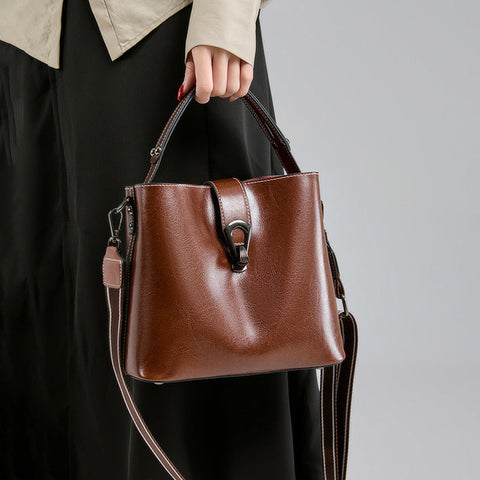
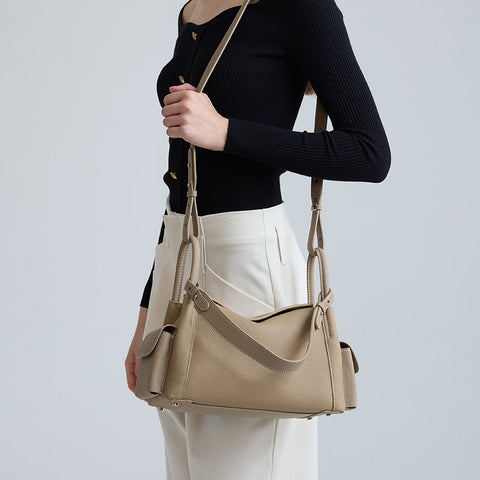
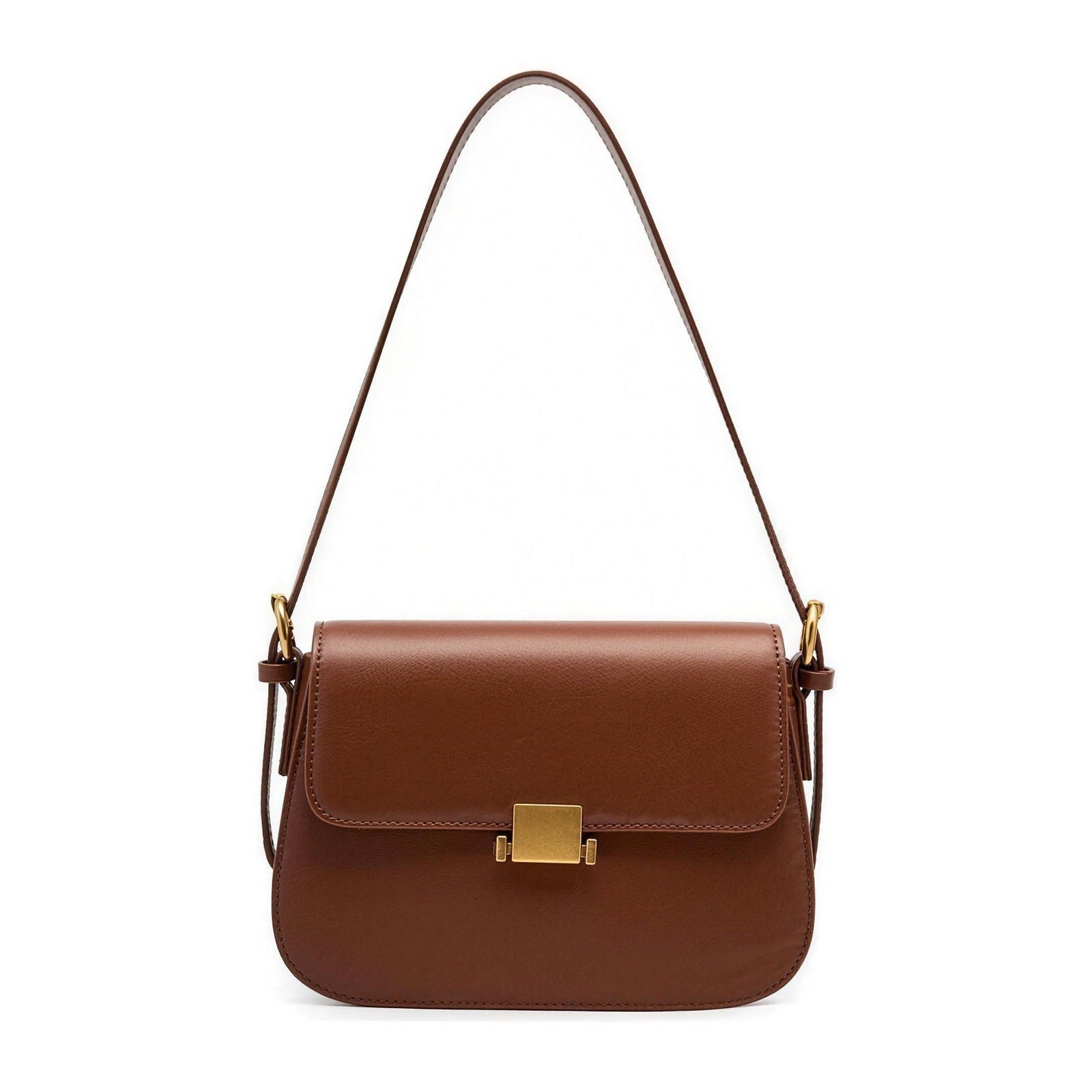
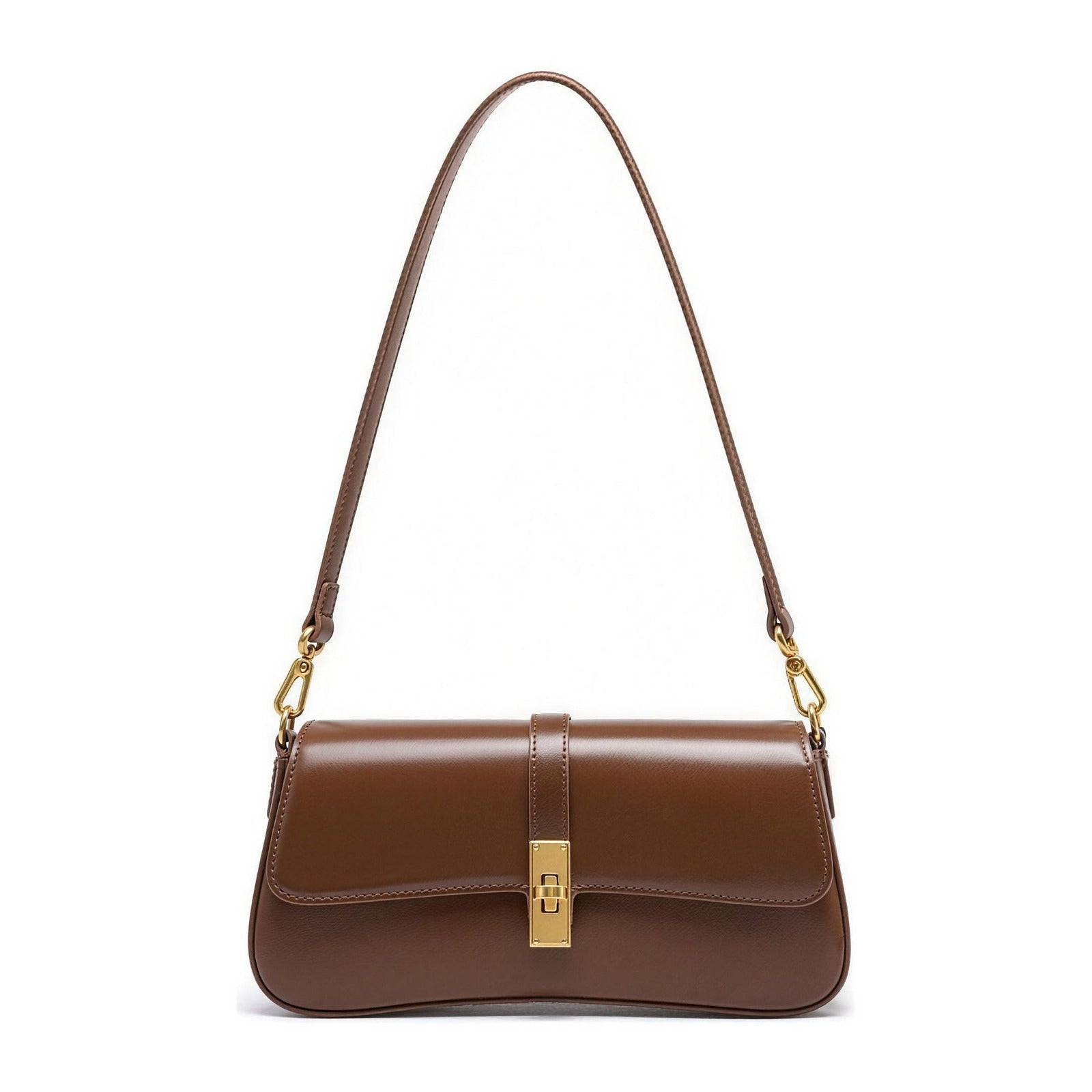
Smooth and semi-aniline cowhide leathers, very common in leather goods, develop a more discreet but real patina: a deeper sheen, increased suppleness, a slightly richer colour. A bag like NINA, in supple cowhide leather, thus develops a patina over time; the waxed leather of PAULINE, for its part, takes on a slightly aged look with use.
Conversely, heavily pigmented, patent or thickly coated leathers patinate little: their protected surface changes less. They do, however, have the advantage of resisting stains better. To understand these differences, reread our comparison of leather types.
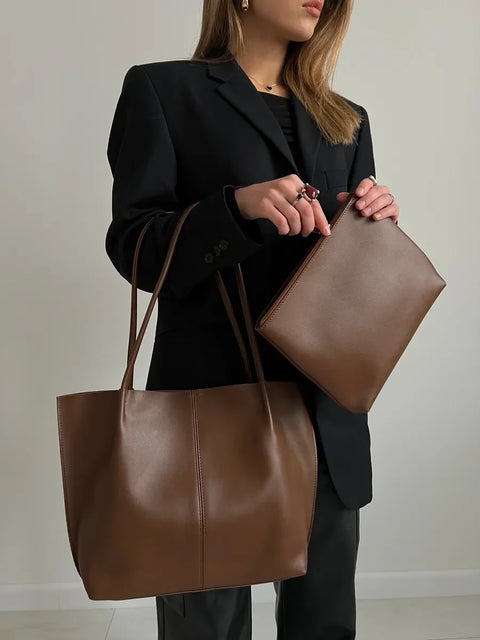
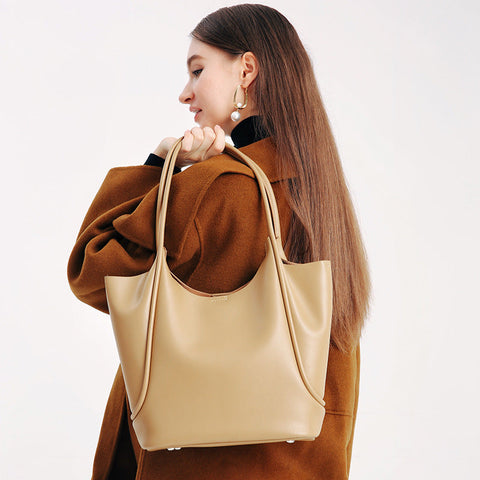
Natural, warm tones are the ones that best show off patina. Caramel, cognac and camel gently darken towards very rich amber shades. Brown gains depth. Beige and natural can evolve towards a luminous honey.
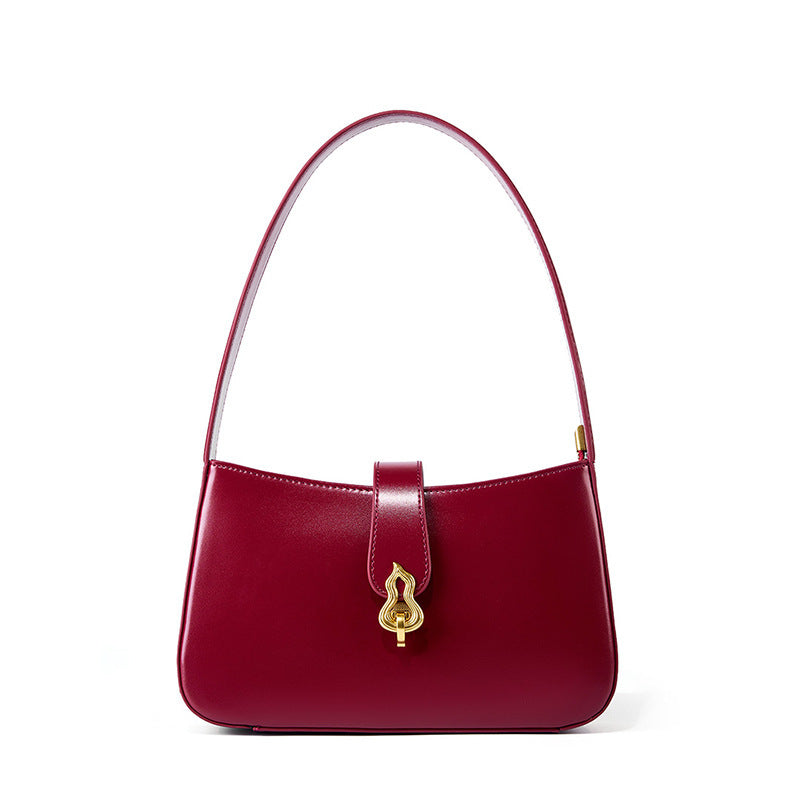
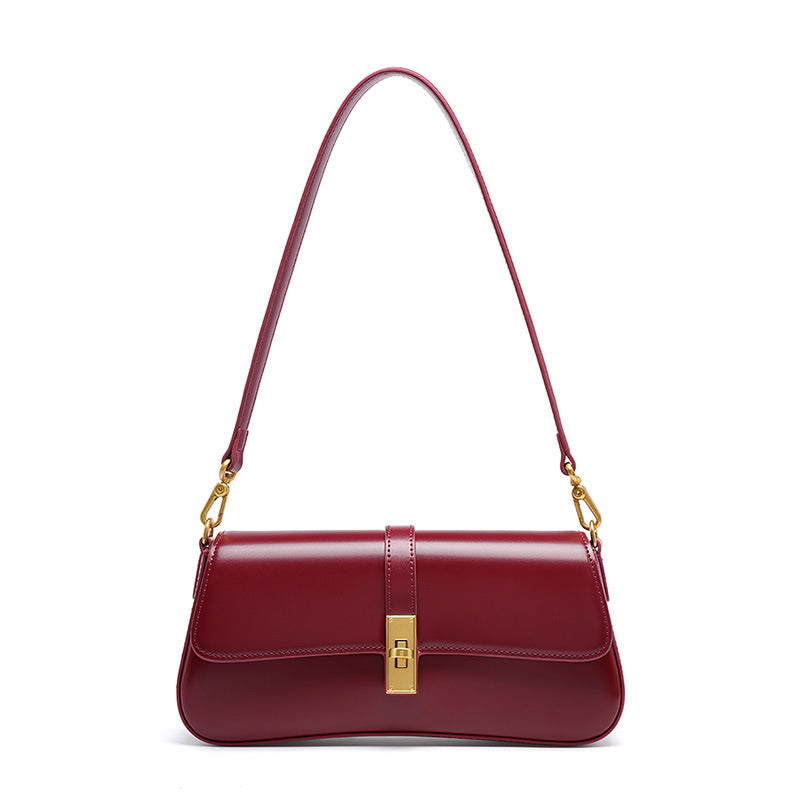
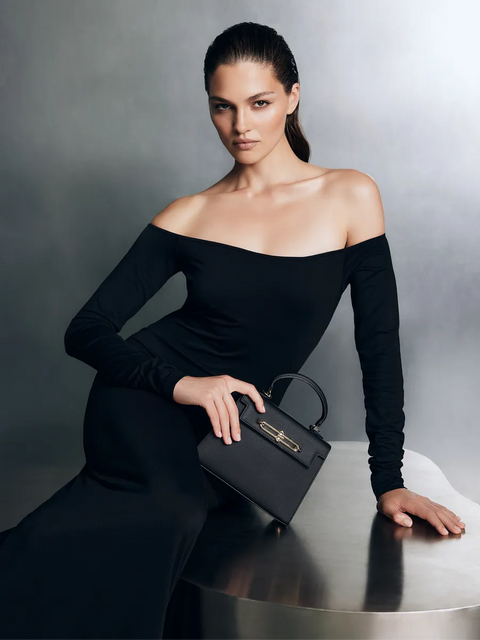
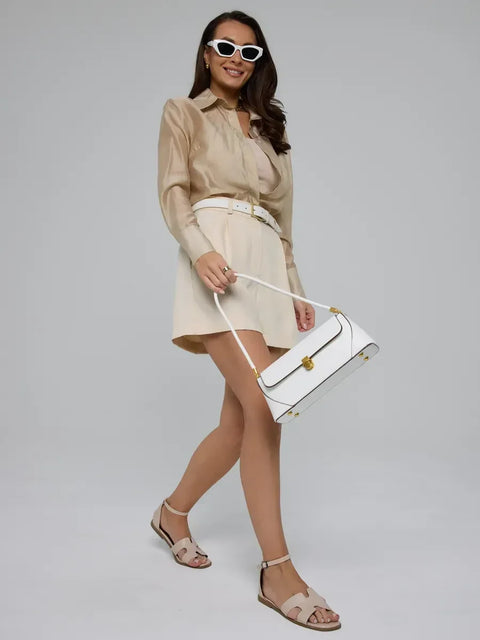
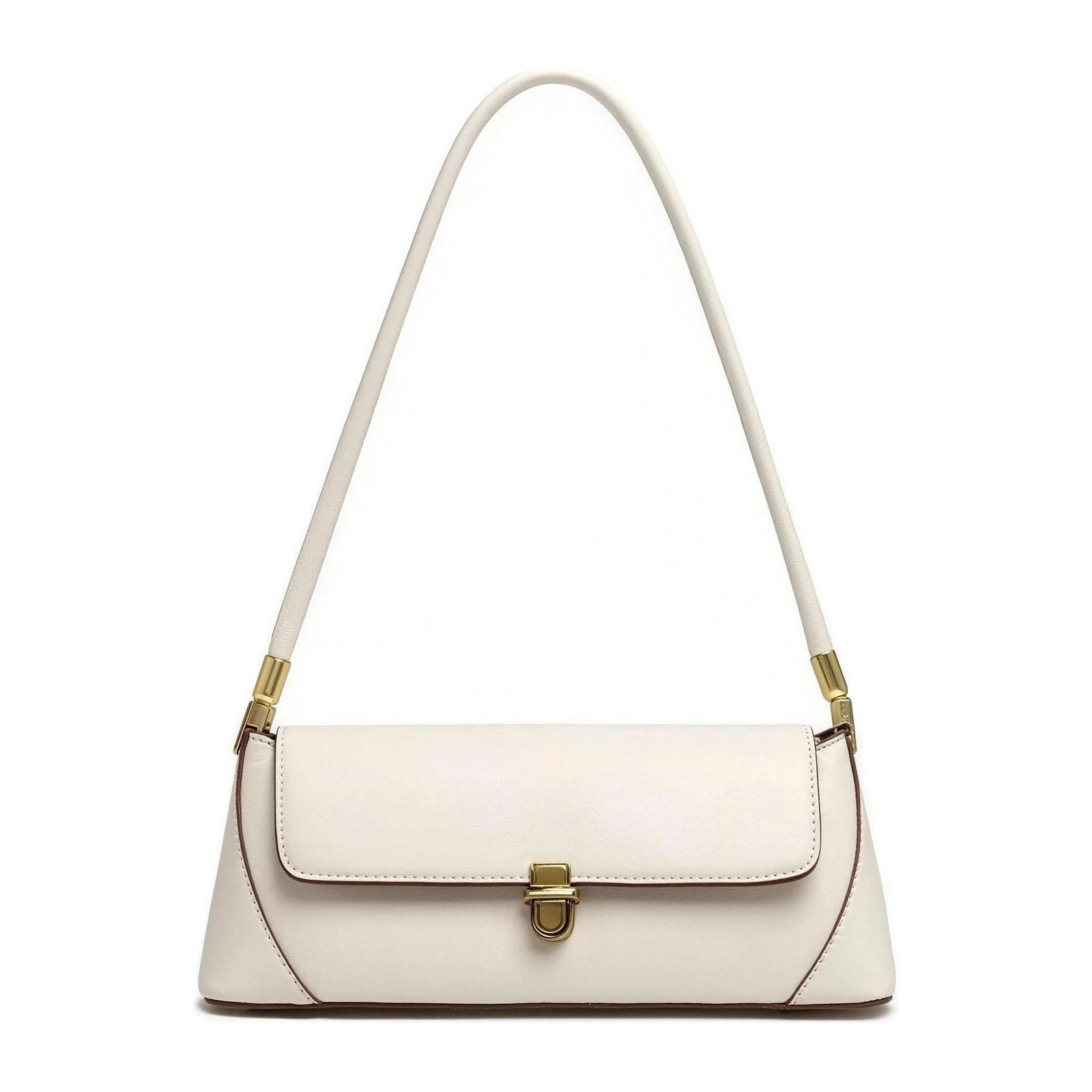
Black patinates too, but more subtly: it mainly gains sheen and suppleness. Bright colours (red, green, pink) generally evolve towards slightly deeper shades. Very light tones like white are more delicate: their evolution can show as slight yellowing or rub marks, hence the importance of regular care.
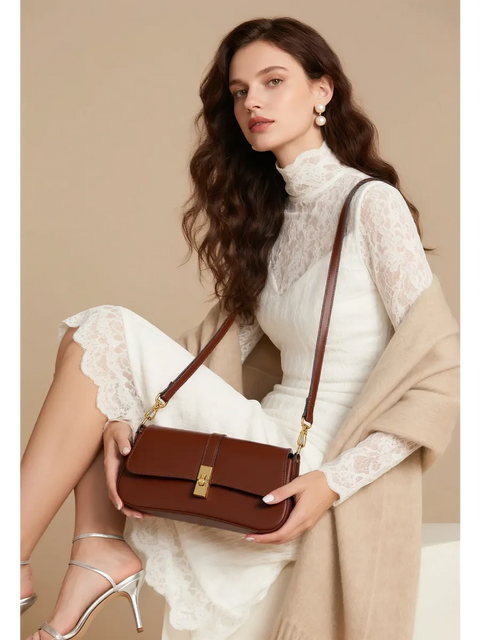
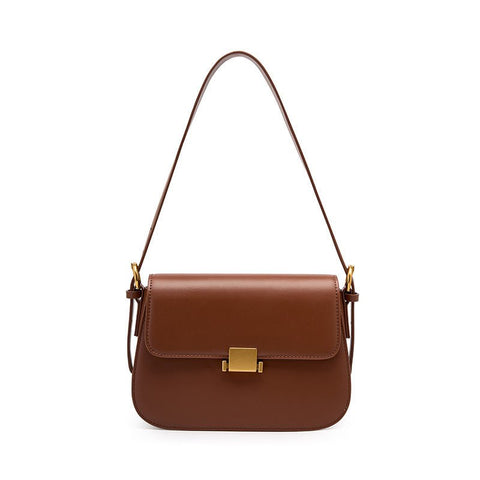
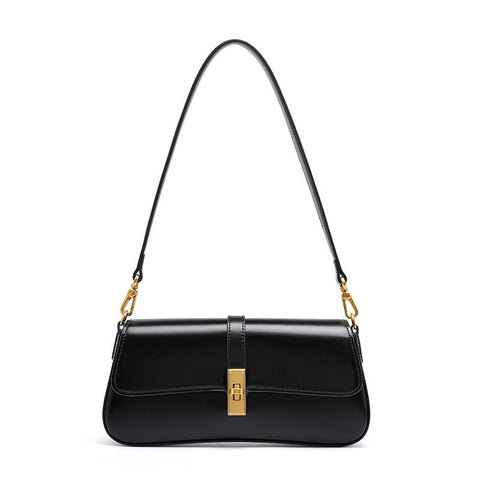
If you love the idea of a bag that evolves with you, caramel and brown tones are ideal. Several of our bags come in them: MILLER, ELENA, NOÉMIE, PAULINE.
A beautiful patina does not come from neglecting your bag. It is built with regular care: dusting, gentle cleaning and nourishing every two to three months. Nourished leather patinates evenly and brightly; dried-out leather dulls and cracks. Our step-by-step care guide covers these habits in detail.
Carry your bag: it is the best way to patinate it. A bag that stays in a cupboard will not change. Conversely, avoid extreme exposure: intense, prolonged sun (which can fade unevenly), direct heat, driving rain without protection.
Finally, accept small marks. A light scratch that fades, a handle shinier than the rest, a slightly darker corner are all part of your bag's story. These are the details that, over the years, will make it unique. For more serious damage, our article repairing a leather bag will guide you.
Leather patina is what makes a genuine leather bag a life companion rather than a mere accessory. Light, hands, rubbing and care build it slowly, giving your bag unique depth and personality. Choose quality leather in a warm tone, carry it often, care for it regularly: it will grow more beautiful year after year. Discover our handbags; the material is specified on each product page.
It is the natural change in its appearance over time: deeper colour, sheen, increased suppleness.
The first changes appear after a few months of regular use; a pronounced patina develops over several years.
No. Synthetic material does not patinate; it deteriorates over time (cracking, peeling).
Carry your bag often, handle it and nourish it regularly. Avoid prolonged exposure to sun, however, which can fade unevenly.
Warm, natural tones: caramel, cognac, camel, brown.
Main article: genuine leather bags: what to know before you buy. Also read: caring for a leather bag and repairing a leather bag. All the articles: leather and its care.